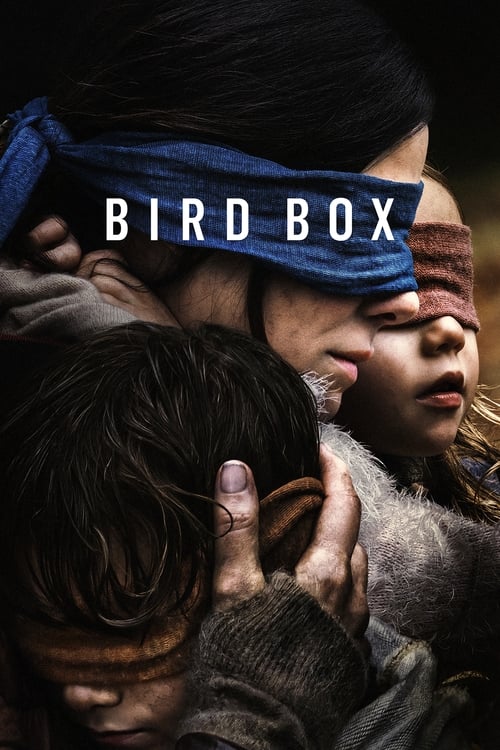
Bird Box
Plot
Five years after an ominous unseen presence drives most of society to suicide, a survivor and her two children make a desperate bid to reach safety.
Get the Weekly Woke Watchlist
New and trending movies scored for woke bias, preachy messaging, and forced political themes — before you waste your evening.
No spam. One useful email per week.
Overall Series Review
Categorical Breakdown
The film features a heavily diverse ensemble cast without a clear narrative need for it, aligning with the forced insertion of diversity. The white female protagonist forms a bond and relationship with a competent and emotionally supportive Black male character, while the most overtly antagonistic and paranoid character in the survivor house is an older white male who frequently expresses distrust and negativity. This character dynamic leans toward depicting the white male as the primary source of internal friction and negativity within the group, while characters of color are largely depicted as sensible, nurturing, or self-sacrificing.
The central conflict is a universal, supernatural, or metaphysical threat to all of humanity, not a critique of Western civilization specifically. The initial scenes show the rapid disintegration of modern society, but the focus is on personal survival and forming a new, smaller community. The safe haven at the end is a traditional institution—a school—that has repurposed itself to shelter survivors, which suggests valuing foundational institutions as shields against chaos rather than framing them as corrupt.
The protagonist, Malorie, is initially introduced as an anti-natalist who openly resents her pregnancy, viewing it as an interference with her career and freedom, scoring high for anti-natal messaging. However, the entire plot functions as a conversion story, forcing her to accept and embody the ultimate protective maternal role, transforming her into a severe, non-negotiable 'Girl Boss' mother. Her male romantic interest is nurturing and competent but ultimately sacrifices himself to protect her and the children, leaving her as the sole, hyper-capable head of the family.
The narrative centers entirely on the survival of a traditional-form, though non-biological, nuclear family unit (a female mother figure, a male child, and a female child). There are no openly non-heteronormative characters or plot points, and the movie does not engage with or lecture on queer theory or gender ideology.
The movie employs a supernatural or demonic threat as the catalyst for the apocalypse, with some characters referencing the entity in explicitly spiritual terms, but the movie itself does not take an anti-religious stance. It avoids overt hostility toward traditional religion. The ending sanctuary is a school for the blind, not a religious compound, leaving the resolution a victory of human connection and practical care, which slightly diminishes the role of a transcendent moral code but does not actively demonize faith.
Get the Weekly Woke Watchlist
New and trending movies scored for woke bias, preachy messaging, and forced political themes — before you waste your evening.
No spam. One useful email per week.