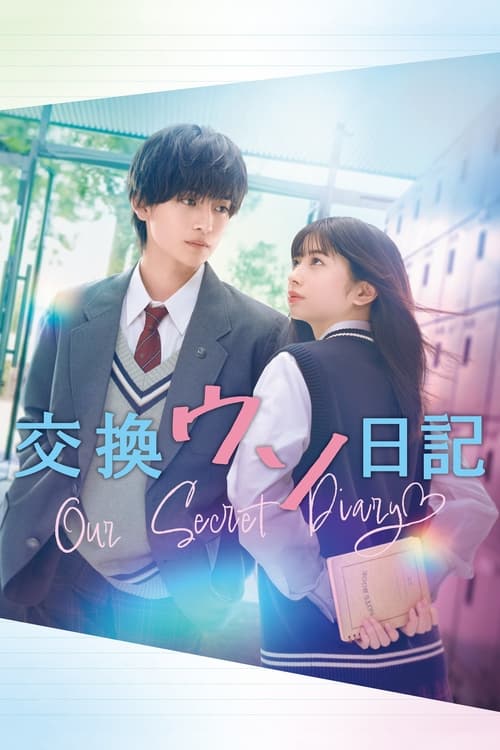
Our Secret Diary
Plot
Nozomi Kuroda is in the 2nd grade of high school. One day, she finds a letter in a classroom desk. The letter has only the word "like" written on it. The person who wrote the letter is Jun Setoyama. He happens to be the most popular boy at the high school. Nozomi Kuroda feels embarrassed, but she eventually leaves a reply in a shoe closet at school. This is how their secret exchange diary begins. Nozomi Kuroda soon learns that the intended recipient for the first letter was her best friend. Nevertheless, Nozomi Kuroda is attracted to Jun Setoyama, who expresses his thoughts and feelings unlike her. She's unable to tell him the truth that the person exchanging messages is her and not her best friend.
Get the Weekly Woke Watchlist
New and trending movies scored for woke bias, preachy messaging, and forced political themes — before you waste your evening.
No spam. One useful email per week.
Overall Series Review
Categorical Breakdown
The story is a Japanese romance with an all-Japanese cast, focusing entirely on a personal, relational conflict based on a lie and communication issues. Character worth is determined by internal factors like honesty and kindness, not by race or immutable characteristics. There is no mention of race-based hierarchies, privilege, or forced diversity.
The setting is a contemporary Japanese high school, and the narrative centers on wholesome teenage experiences and aspirations. The film is a light-hearted romance that presents no critique of Japanese society, culture, or ancestors. One of the male character's defining traits is his care for his sickly grandmother, showing respect for family and elders.
The female protagonist, Nozomi, is initially timid and her arc revolves around finding her voice and learning to be honest. The popular male lead, Jun, is an actively positive force who encourages her empowerment. The film celebrates female friendship and the male character is presented as admirable and caring, not toxic or a bumbling idiot. The themes are complementary and focused on personal development, not 'Girl Boss' tropes or anti-natalism.
The core plot is a traditional heterosexual love story focusing on the pairing of the male and female leads. The film contains no evidence of centering alternative sexualities, deconstructing the nuclear family, or presenting gender ideology. The structure is entirely normative.
Reviews indicate the film's moral messages revolve around honesty, friendship, and chasing dreams. The themes are secular but promote positive, objective values, not moral relativism. There is no presence of religion, particularly no hostility toward Christianity or traditional faith systems.
Get the Weekly Woke Watchlist
New and trending movies scored for woke bias, preachy messaging, and forced political themes — before you waste your evening.
No spam. One useful email per week.