Beauty and the Beast
Plot
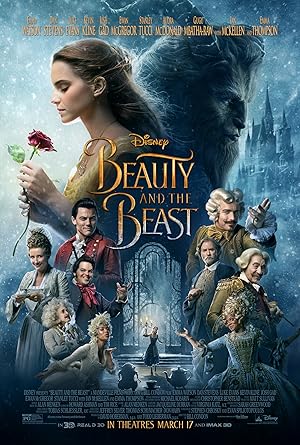
Disney's animated classic takes on a new form, with a widened mythology and an all-star cast. A young Prince, imprisoned in the form of a Beast (Dan Stevens), can be freed only by true love. What may be his only opportunity arrives when he meets Belle (Emma Watson), the only human girl to ever visit the castle since it was enchanted.
Get the Weekly Woke Watchlist
New and trending movies scored for woke bias, preachy messaging, and forced political themes — before you waste your evening.
No spam. One useful email per week.
Overall Series Review
Categorical Breakdown
The movie includes a forced insertion of diversity, such as race-swapped roles for secondary enchanted objects, like the wardrobe and the candleholder's partner. The white male villain, Gaston, represents 'toxic masculinity' and is positioned as vain, sadistic, and deserving of total defeat. Belle is an intellectual outsider who is ostracized and misunderstood by the entirety of her white, rural community for reading and inventing, framing her character merit against the intellectual deficiency of her neighbors.
The traditional French village represents a backward, ignorant, and provincial society that ridicules Belle and her father for not conforming. The entire community is easily manipulated into becoming a violent mob by the male villain, Gaston. The home culture is presented as intellectually stifling and corrupt, and Belle's ultimate goal is to escape its judgment. The only positive moral agent in the village is the beggar-woman/enchantress, who is a societal outcast.
Belle is overtly portrayed as a 'Girl Boss' figure: she is an inventor who creates a washing machine to delegate domestic chores and teach a young girl to read, rejecting the passive female role. Her costuming intentionally removes the corset and includes work boots and trousers to emphasize her independence and physical capability. The primary male figures are either toxic (Gaston) or emotionally abusive (the Beast), forcing the male character's redemption and transformation to depend entirely on the heroine's superior character and unwavering independence. The narrative actively critiques traditional marriage roles.
The movie was publicized for featuring an 'exclusively gay moment' involving Gaston’s sidekick, LeFou, centering sexual identity in the cultural conversation surrounding a children's film. While LeFou shows clear homoerotic attachment to Gaston throughout the story, the actual on-screen moment confirming his sexuality is a fleeting shot of him dancing with another man at the end. The subject is raised primarily for ideological signaling and public discourse rather than being central to the plot or character arc, which reduces the intensity score.
The core plot is a moral allegory about judging by inner qualities and the power of sacrificial love for redemption. The Beast's transformation is based on his moral change and self-sacrifice, acknowledging a higher moral law established by the enchantress. One interpretation of the film points to the castle's transformation culminating in a statue of Saint Michael slaying the devil, supporting themes of objective moral truth and spiritual rebirth.
Get the Weekly Woke Watchlist
New and trending movies scored for woke bias, preachy messaging, and forced political themes — before you waste your evening.
No spam. One useful email per week.