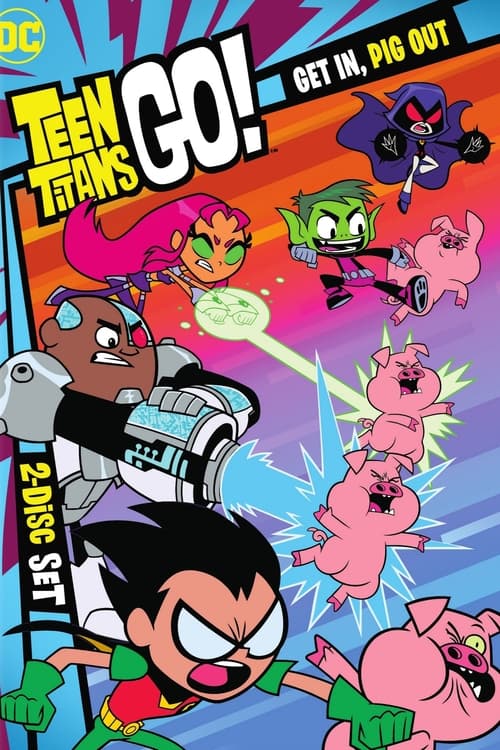
Teen Titans Go!
Season 3 Analysis
Season Overview
In this season, the Titans learn about cartoon violence, Beast Boy joins a pyramid scheme and Starfire takes a stressed Cyborg to a secret garden.
Season Review
Categorical Breakdown
Characters are defined by their absurdity and personality flaws rather than their racial or ethnic backgrounds. The show avoids intersectional hierarchies and does not lecture the audience on systemic oppression or privilege, opting instead for a meritocracy of stupidity where every character is equally prone to buffoonery.
The narrative frequently mocks established institutions like the Justice League and traditional superhero tropes, portraying them as out-of-touch or incompetent. However, this cynicism is directed at the genre and authority figures in general rather than a specific attack on Western civilization or its historical foundations.
Male characters are consistently portrayed as bumbling, neurotic, and physically weak, especially Robin, whose leadership is a constant joke. Raven and Starfire are typically depicted as more powerful and emotionally stable, though they are still susceptible to the show's overarching theme of selfishness and chaos.
The series adheres to traditional normative structures regarding relationships, primarily focusing on Robin's unrequited romantic interest in Starfire. There is an absence of gender theory lecturing or the centering of alternative sexual identities within this season's storylines.
The show operates in a moral vacuum where traditional concepts of 'good vs. evil' are discarded for situational humor. The characters frequently engage in objectively 'bad' behavior without moral consequences, reflecting a worldview rooted in moral relativism and the absence of any higher transcendent authority.