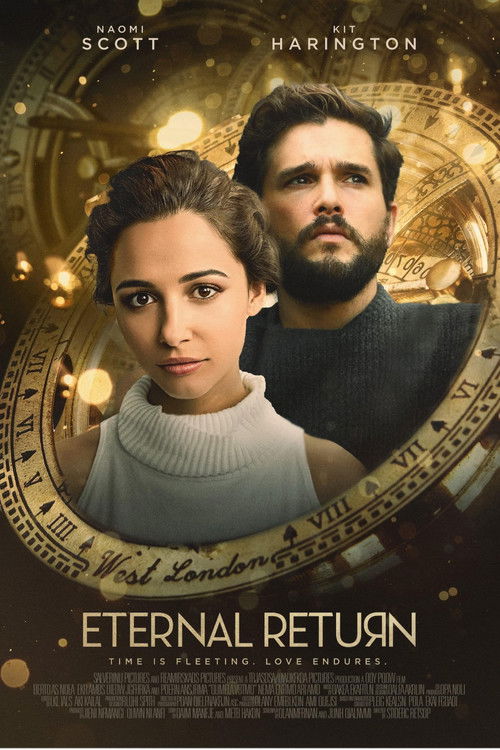
Eternal Return
Plot
Cass has come to a personal point of emotional invulnerability, until she meets Virgil, a cartographer. Along with his partner Malcolm, they attempt to travel back in time to awaken Cass to love again.
Get the Weekly Woke Watchlist
New and trending movies scored for woke bias, preachy messaging, and forced political themes — before you waste your evening.
No spam. One useful email per week.
Overall Series Review
Categorical Breakdown
The story is not framed through a political lens, with the conflict being purely emotional and universal (grief and love) rather than a lecture on privilege or oppression. The primary love interests and central trio represent a colorblind casting approach, with the non-white female lead, Cass, being supported and romantically pursued by an endearing white male hero, Virgil. Characters are judged by their depth of feeling and sincerity.
The film features a sincere and whimsical appreciation for its home setting of London, portraying it as a city of romance, magic, and hidden secrets. The plot itself is a celebration of the power of personal memory and love, utilizing a nostalgic trip to the past to find the strength to live in the present. The narrative respects the emotional ties to one's past experiences and culture rather than deconstructing or demonizing them.
The central female character, Cass, drives the story, but her arc is about overcoming emotional vulnerability and accepting love, not about a 'girl boss' trajectory or rejecting masculinity. She is not a perfect, instantly powerful Mary Sue, but a wounded woman who is helped in her journey by two supportive male figures, Virgil and Malcolm. The narrative celebrates finding new love and emotional healing, which frames the dynamic as complementary.
The core of the plot is a conventional, heterosexual romantic pairing between Cass and her two partners (her deceased partner Julian and new interest Virgil). The narrative structure is entirely normative, prioritizing this male-female pairing as the standard for love and healing. There is no evidence of a political focus on gender theory, sexual identity as a central trait, or any effort to deconstruct the traditional family unit.
The film's exploration of fate, love, and time travel is handled through a secular, magical fantasy concept (mapping memories) rather than traditional religion. While it is not explicitly spiritual, it deals with transcendent human concepts like the enduring power of love, courage, and objective emotional truth. It is not actively hostile toward religion, and the moral message encourages living with open-hearted hope.
Get the Weekly Woke Watchlist
New and trending movies scored for woke bias, preachy messaging, and forced political themes — before you waste your evening.
No spam. One useful email per week.