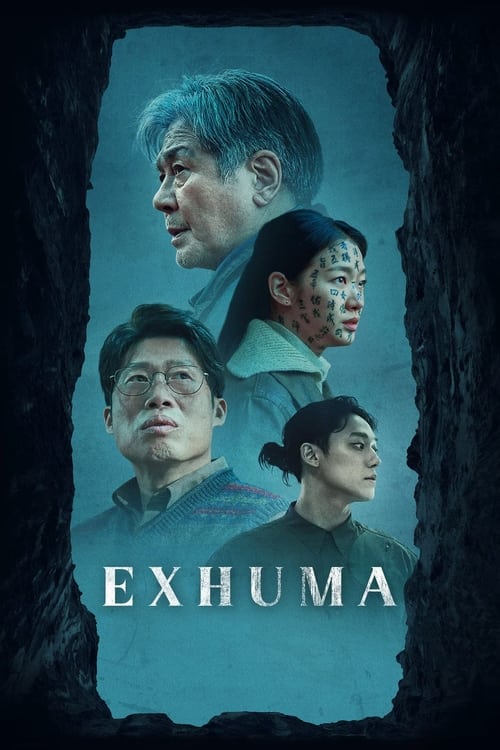
Exhuma
Plot
After tracing the origin of a disturbing supernatural affliction to a wealthy family's ancestral gravesite, a team of paranormal experts relocates the remains—and soon discovers what happens to those who dare to mess with the wrong grave.
Get the Weekly Woke Watchlist
New and trending movies scored for woke bias, preachy messaging, and forced political themes — before you waste your evening.
No spam. One useful email per week.
Overall Series Review
Categorical Breakdown
The narrative's central conflict relies entirely on national and ethnic identity, pitting a dedicated group of Korean professionals against a malevolent force tied to historical Japanese imperialism. The film explicitly defines the villain by his foreign, Japanese identity and his plot to spiritually sabotage the Korean nation, making racial/national identity an immutable characteristic that drives the entire plot rather than universal merit.
The film demonstrates the opposite of civilizational self-hatred; it is a thoroughly nationalist work that celebrates and defends Korean heritage, folklore, and land from a foreign historical aggressor. Ancestors who defended the nation are honored, and the institutions of traditional spirituality (shamanism/geomancy) are depicted as the necessary shield against chaos and foreign evil. The one ancestor who is vilified is a 'Chinilpa,' a Korean collaborator who betrayed his own nation.
The core team features a highly competent and charismatic female shaman, Hwa-rim, who is a powerful professional and often takes the lead in ceremonial matters. However, she works as a complementary partner with equally skilled male characters, including a respected elderly feng shui master and a mortician. Men are not depicted as bumbling idiots, and the plot is initiated by the need to save a baby, showing no anti-natalist messaging.
The narrative focuses exclusively on the occult, Korean nationalism, and ancestor worship. Sexual and gender identity politics are entirely absent from the plot, which maintains a normative structure centered on traditional familial and national lineage.
Traditional Korean spiritual beliefs, including shamanism and geomancy (feng shui), are the source of all moral and practical strength in the film. The movie completely embraces a transcendent, objective moral order where real spiritual forces of good and evil exist and are actively engaged through ritual and faith. There is no hostility toward religion or suggestion of moral relativism.
Get the Weekly Woke Watchlist
New and trending movies scored for woke bias, preachy messaging, and forced political themes — before you waste your evening.
No spam. One useful email per week.