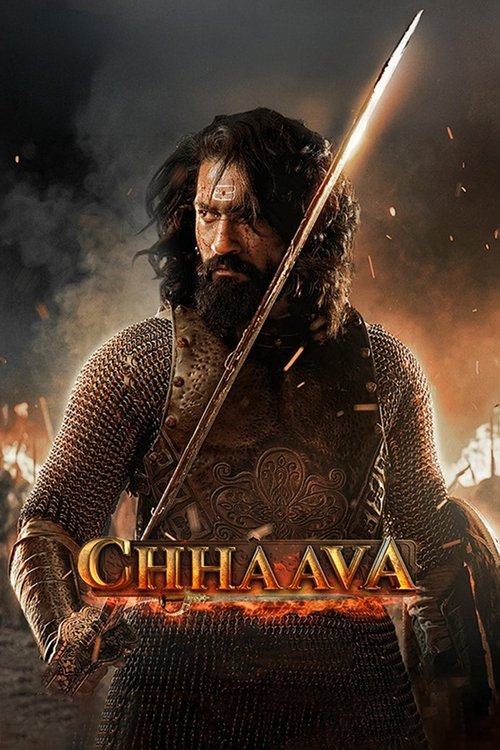
Chhaava
Plot
Shivaji's death sparks the Maratha-Mughal conflict. His son Sambhaji leads resistance against Aurangzeb's forces. Amid battles and intrigue, both sides face challenges in a struggle for power.
Get the Weekly Woke Watchlist
New and trending movies scored for woke bias, preachy messaging, and forced political themes — before you waste your evening.
No spam. One useful email per week.
Overall Series Review
Categorical Breakdown
The story centers on a conflict defined by distinct cultural and political identities: Maratha vs. Mughal. Merit is valued within the Maratha framework, where the hero's struggle is for 'Dharma' and national self-rule. The narrative does not utilize the 'intersectional lens' by vilifying 'whiteness' or forcing modern diversity tropes; rather, it uses a form of regional-historical identity to drive the central conflict. Historical casting is authentic to the period and regional identities portrayed.
The movie operates as a direct tribute to an ancestor and institution. Sambhaji's character embodies courage and an 'unwavering commitment to protecting his land and Dharma.' The narrative validates and celebrates the home culture and its heroic past. It champions 'Hindavi Swaraj' (Maratha self-rule), presenting institutions and heritage as inherently noble shields against chaos, which is the exact opposite of civilizational self-hatred.
Gender dynamics are traditional and complementary. The main focus is on the male lead's strength, valor, and protective masculinity. Female characters, including the co-lead, occupy supportive, often familial roles, affirming the hero's mission and legacy. Dialogue assigned to female characters often reinforces the hero's position. The film avoids inserting 'Girl Boss' tropes or messaging that frames motherhood as a prison; instead, it reinforces traditional gender roles of the era.
The movie is a historical epic focused on war and political conflict in 17th-century India. The narrative contains no discussion, inclusion, or centering of alternative sexual ideologies or gender theory. The structure upholds the normative, traditional male-female pairing as the standard, common for its historical setting and regional genre.
Faith, referred to as 'Dharma,' serves as a primary source of transcendent moral strength and a core justification for the hero's struggle. The climax involves the protagonist's refusal to abandon his religion, accepting martyrdom instead, a clear demonstration of objective spiritual conviction. Religion is framed as the highest moral law, and its defense is presented as the ultimate heroic act.
Get the Weekly Woke Watchlist
New and trending movies scored for woke bias, preachy messaging, and forced political themes — before you waste your evening.
No spam. One useful email per week.