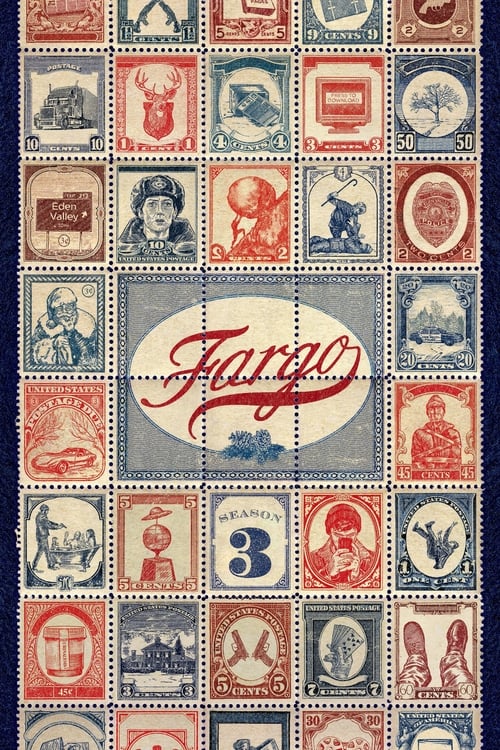
Fargo
Season 3 Analysis
Season Overview
December 2010, Minnesota. Emmit Stussy, the Parking Lot King of Minnesota, is a handsome, self-made, real estate mogul and family man - an American success story. His slightly younger brother, Ray Stussy, on the other hand is more of a cautionary tale. Balding, pot-bellied, Ray is the kind of guy who peaked in high school. Now a parole officer, Ray has a huge chip on his shoulder about the hand he's been dealt, and he blames his brother, until the arrival of a mysterious personality changes everything.
Season Review
Categorical Breakdown
The narrative does not rely on racial or intersectional hierarchy; the central conflict is about class, greed, and personal morality within a white family. The main antagonist is a foreign, globalist figure (Varga) whose evil is based on predatory capitalism, not 'whiteness.' Diversity is present but non-political.
Hostility is directed not at Western civilization or the Midwest setting itself, but at a foreign, globalist, and financial elite represented by V.M. Varga, who invades and corrupts a local, American business. The story is a moral fable about maintaining justice against amoral, de-localized evil. The institutions of local justice, championed by Gloria, are shown as the bulwark against chaos.
The score is high due to the overt contrast in gender competency. The two central female characters, Police Chief Gloria Burgle and the criminal Nikki Swango, are consistently shown as sharp, competent, and possessing superior moral clarity or strategic intelligence compared to the bumbling, petty, and weak male protagonists, Ray and Emmit Stussy. This frames the men as largely incompetent or easily victimized.
Alternative sexual ideology is present only in a minor, peripheral plot element regarding Gloria Burgle's son questioning his gender identity. This thread is not a major focus, is not used to lecture the audience, and the overall family and romantic structures are normative, keeping the score moderate.
The score is very low as the season rejects moral relativism. The main villain, V.M. Varga, preaches a nihilistic philosophy that explicitly denies objective good, but the narrative structure frames him as a representation of pure evil, often with biblical allusions (Jacob and Esau, the Devil). The protagonist, Gloria, is the force of objective, persistent justice, validating a transcendent moral law.