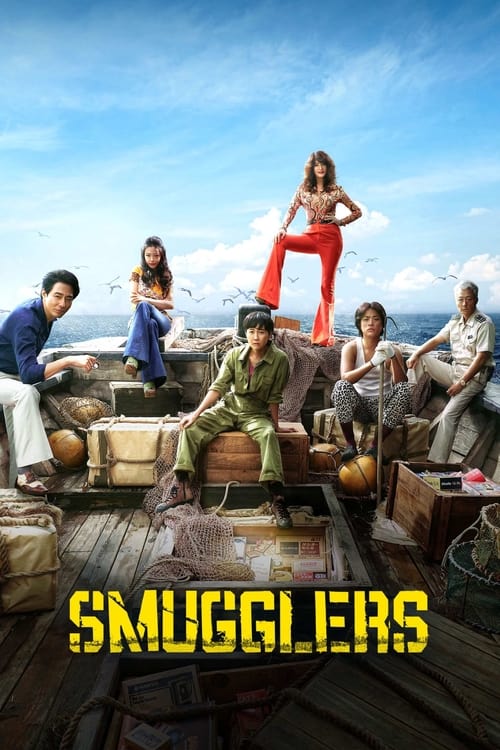
Smugglers
Plot
During the 1970s, in Kunchon, there were women divers who were able to dive without equipment, including two best friends Choon-ja and Jin-sook, Jin-sook's brother and Hammer. They always collected seafood under water for living. But, as fewer factories started to be built near the beach, the women divers started to have trouble with what they were doing for living. Without any choice, the ship crews decided to join the smuggling business in the water to seek a way for their living. But the smuggling business in their village got too big for Jin-sook's family to handle and the peaceful village was gradually broken.
Get the Weekly Woke Watchlist
New and trending movies scored for woke bias, preachy messaging, and forced political themes — before you waste your evening.
No spam. One useful email per week.
Overall Series Review
Categorical Breakdown
The film does not focus on race, immutable characteristics, or a global intersectional hierarchy but instead on a localized struggle of working-class Korean women (*haenyeo*) against industrial pollution and corruption. The casting is historically authentic to the haenyeo of the region in the 1970s. The score is low because it avoids the vilification of 'whiteness' or forced diversity, but slightly above the minimum as the plot leverages the identity of 'haenyeo women' as the specific oppressed group against the system.
The conflict is driven by industrial pollution from nearby chemical factories ruining the traditional livelihood of the community, which is a critique of specific government or corporate failures, not a wholesale condemnation of Korean civilization or ancestry. The traditional and highly skilled *haenyeo* culture is portrayed as a source of strength and capability for the characters, honoring a part of their heritage rather than deconstructing it. The critique is of specific 'modern' corruption, not fundamental civilizational self-hatred.
The film is overtly framed around the theme of 'women empowerment' and is lauded as a 'female-centric' narrative, contrasting with the director's previous 'male-dominant' work. The central protagonists are 'Girl Boss' figures who are shown to be highly capable, intelligent, and physically strong, with a primary goal of financial independence. The predatory male villains are often depicted with 'fragile male ego[s]' and are easily pitted against each other or defeated by the female leads. This aligns strongly with the highest score as the gender dynamic is a key ideological driver of the plot.
There is no overt or implied presence of alternative sexual ideologies, deconstruction of the nuclear family, or gender theory lecturing in the narrative. The plot is strictly focused on the action and conflict of the smuggling ring.
The film is a crime and action genre story focused on survival, money, and revenge. The narrative contains no elements of hostility toward religion, specifically Christianity, or discussion of moral relativism versus objective truth. Morality is instead framed by the legal/criminal activities of the characters.
Get the Weekly Woke Watchlist
New and trending movies scored for woke bias, preachy messaging, and forced political themes — before you waste your evening.
No spam. One useful email per week.