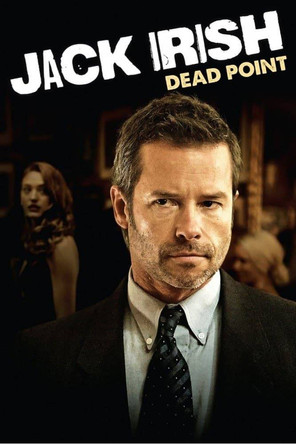
Jack Irish: Dead Point
Plot
Jack Irish is thrown into a world of club owners, drug dealers and killers when he is hired by a judge to find a mysterious red book.
Get the Weekly Woke Watchlist
New and trending movies scored for woke bias, preachy messaging, and forced political themes — before you waste your evening.
No spam. One useful email per week.
Overall Series Review
Categorical Breakdown
Characters are judged by their integrity or criminality, not their race or identity group. The main character is a struggling white male who serves as the moral center against high-society corruption. Indigenous Australian actors, such as Aaron Pedersen as Jack's associate Cam, are integrated into the story as competent allies, which reflects a colorblind approach to casting without injecting political commentary on intersectional hierarchy. The focus is on class and corruption, not race.
The film criticizes corruption within the justice system and high society, not the fundamental institutions of Western civilization itself. The narrative depicts a gritty but familiar and celebrated Melbourne world of local pubs, the horse-racing community, and Australian working-class life. The 'old guys at the Prince of Prussia' are a source of community and continuity for the protagonist, treating Australian culture with affection and familiarity, not self-hatred.
Female characters hold prominent and powerful roles, notably Jack's ex, Linda, an ambitious, globe-trotting investigative journalist. She is a highly successful career-focused woman who is estranged from Jack, which leans toward the 'career is the only fulfillment' trope. The male protagonist, Jack, is an emasculated figure in the traditional sense, defined by his personal failures, alcoholism, and professional sloppiness, though he is ultimately the heroic figure. This creates a moderate balance of competent women and flawed men.
The core plot hinges on a scandal involving 'bisexual blackmailers,' 'blackmailing lovers,' and sexual secrets, indicating the presence of non-normative sexuality at the heart of the high-society crime. This is presented as a scandalous secret used for leverage, which gives a heightened plot function to alternative sexualities, moving it past a simple normative structure. However, this content serves the noir crime genre's focus on dark secrets and is not an engine for deconstructing the nuclear family or lecturing on gender theory.
The primary moral struggle is secular, centered on corruption, power, and crime in the legal and criminal world. Christian elements are present in the setting—a christening is mentioned, and the judge meets Jack in a church—but these institutions are used merely as locations or background for traditional life. There is no open hostility toward religion or framing of Christian characters as villains or bigots; the morality is generally objective (crime is wrong, corruption is bad) within the context of a cynical crime drama.
Get the Weekly Woke Watchlist
New and trending movies scored for woke bias, preachy messaging, and forced political themes — before you waste your evening.
No spam. One useful email per week.