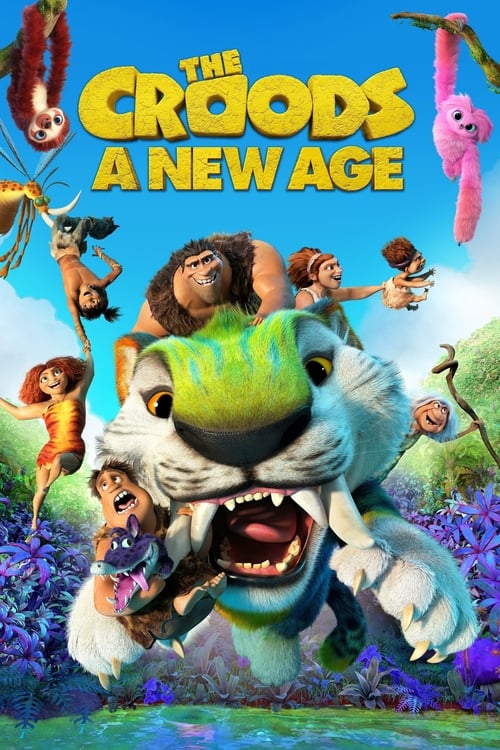
The Croods: A New Age
Plot
Searching for a safer habitat, the prehistoric Crood family discovers an idyllic, walled-in paradise that meets all of its needs. Unfortunately, they must also learn to live with the Bettermans -- a family that's a couple of steps above the Croods on the evolutionary ladder. As tensions between the new neighbors start to rise, a new threat soon propels both clans on an epic adventure that forces them to embrace their differences, draw strength from one another, and survive together.
Get the Weekly Woke Watchlist
New and trending movies scored for woke bias, preachy messaging, and forced political themes — before you waste your evening.
No spam. One useful email per week.
Overall Series Review
Categorical Breakdown
The central conflict is a culture and class clash between the 'primitive' Croods and the 'advanced' Bettermans. The Bettermans are portrayed as smug and condescending toward the Croods, showing a form of cultural prejudice, but this critique is aimed at class-based arrogance rather than race or immutable characteristics. The narrative concludes with both families uniting and accepting each other's distinct merits.
The film critiques the 'civilized' Betterman lifestyle as being fragile, self-satisfied, and dangerously isolated from reality. This can be interpreted as a satire of overly-domesticated modernity. However, the film also does not entirely demonize this 'civilization'; it advocates for a fusion with the Croods' rugged, ancestral vitality. The necessary inclusion of the Croods' primal survival skills validates the 'ancestral' way of life as essential, preventing a total civilizational self-hatred score.
The movie strongly leans into the 'Girl Boss' trope by having the women of both families form the 'Thunder Sisters,' a hyper-competent rescue team in the climax. The men, Grug and Phil, are depicted as bumbling and ineffective, becoming the damsels in distress who need saving. Teenage characters Eep and Dawn also form an instant, non-competitive female friendship instead of fighting over the boy, Guy. Motherhood is a central identity for the adult female leads Ugga and Hope, which slightly offsets the full 'anti-natalism' criteria.
The narrative centers entirely on the traditional male-female pairing and courtship between Eep and Guy, and the importance of the nuclear family is repeatedly affirmed. The female friendship between Eep and Dawn is positive and avoids relationship conflict over a male, but the film does not introduce alternative sexualities, deconstruct the family unit, or engage in gender ideology lecturing.
The prehistoric setting avoids commentary on traditional, organized religion, especially Christianity. The primary moral themes are positive, focusing on the importance of family, community, forgiveness, and sacrifice, which aligns with transcendent morality. The Bettermans' 'new age' sophistication is a source of comedy and a critique of isolating modernity, not a spiritual attack.
Get the Weekly Woke Watchlist
New and trending movies scored for woke bias, preachy messaging, and forced political themes — before you waste your evening.
No spam. One useful email per week.