Rick and Morty
Season 3 Analysis
Season Overview
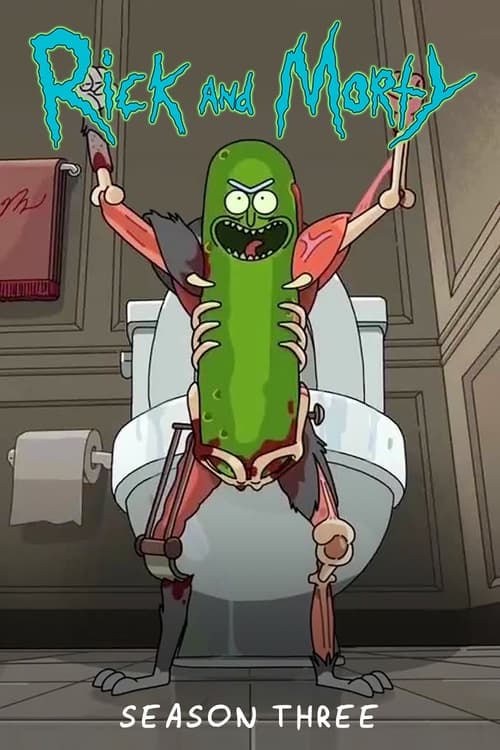
Rick and Morty travel to Atlantis and take some time to relax, plus Rick turns himself into a pickle and faces off against the president.
Season Review
Categorical Breakdown
The episode 'The Ricklantis Mixup' is an explicit allegory where the Mortys are framed as an oppressed minority group and the Ricks are the privileged, dominant class, directly mirroring real-world systemic racism and class struggles. The narrative includes a corrupt police force of Ricks who abuse Mortys purely based on their inferior status. This plot structure exists to lecture on systemic oppression using immutable characteristics (Morty-ness). The Vindicators team is satirically diverse, with a joke being made about 'heroes of color' dying off-screen.
The season reinforces a cynical, nihilistic worldview where all institutions are deemed corrupt and meaningless, which serves as a critique of civilization itself. The American government, personified by the President, is repeatedly depicted as a bumbling and ineffective enemy easily manipulated or defeated by Rick, undermining national authority. The ultimate defeat of the Galactic Federation and Rick's constant deconstruction of the family unit frame all civilizational structures as pointless 'drudgery'.
Beth's central arc is one of feminist discontent, revolving around her feeling that marriage and motherhood have stifled her true potential, which aligns with anti-natalist messaging. Her final decision to potentially replace herself with a clone to escape the responsibilities of her home life reinforces the idea of career and freedom being superior to family fulfillment. Jerry is consistently depicted as a bumbling, sensitive failure who is incapable of being the protective patriarch, thus contributing to the emasculation trope. Summer is portrayed as a hyper-competent and resourceful 'Girl Boss' figure who often takes charge and even surpasses Morty.
Alternative sexualities and gender ideology are not a central, driving plot point in this specific season, nor is there explicit lecturing on queer theory. The focus is on the family dynamic and political satire. The show maintains a normative structure, even if it is satirically dysfunctional and deconstructed. Rick's 'questionable sexuality' is primarily a nihilistic joke and not a serious centering of alternative sexual identity.
The core of Rick's philosophy, which dominates the narrative, is a pure nihilism that dictates that 'nothing matters' and 'morals are made up,' which is the definition of moral relativism. The show presents this complete lack of objective truth as the reality of the universe. The sole counter-point is the episode where Rick purges his extreme atheism/anger as a 'toxic quality,' which briefly suggests a balanced perspective is possible. However, the overwhelming narrative weight is still on the futility of faith and objective truth.