Rick and Morty
Season 8 Analysis
Season Overview
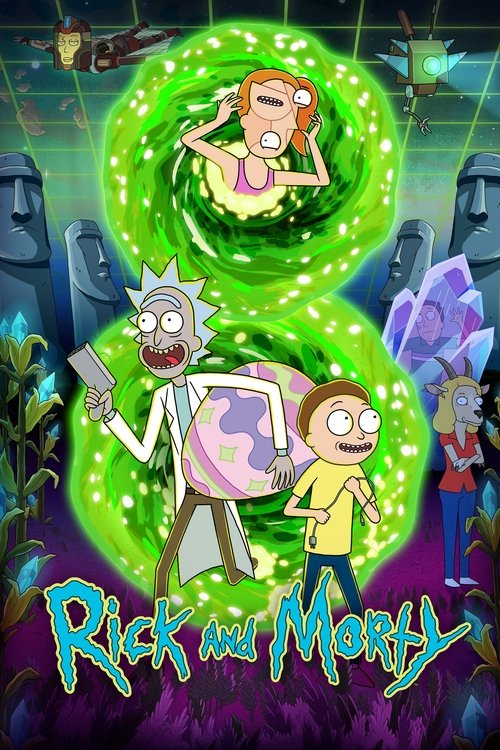
Rick and Morty are back for Season Eight! Life has meaning again! Anything is possible! Look out for adventures with Summer, Jerry, Beth, and the other Beth. Maybe Butter Bot will get a new task? Whatever happens, you can't keep Rick and Morty down for long. People have tried!
Season Review
Categorical Breakdown
The main narrative avoids direct race-based intersectional conflict, but an episode includes explicit class-war commentary, moving the plot toward systemic oppression themes. The narrative includes a 'Killdozer' parody, which draws commentary from some viewers that the incident's perception is a function of white male privilege. While not the central theme, the show features political messaging that focuses on power dynamics rather than a universal meritocracy.
The show continues its tradition of nihilistic mockery of all civilization, which includes Western institutions. An episode features Rick becoming annoyed that a theme park modeled after Earth is now 'nicer' and 'safer' than its originally 'shitty' form, suggesting a preference for the chaos and immorality of Western deconstruction over stability. The family and home are constantly under assault, but the season's core arc is Rick choosing to prioritize his chosen family, which provides a counter-narrative to total civilizational self-hatred.
The core theme of the season is 'fatherhood' and Rick taking responsibility for his daughters. The female characters are not depicted as perfect 'Mary Sues.' The two Beths are shown to be equally flawed as Rick, engaging in a highly destructive and psychotic plot when they regress to childhood. Summer's 'maturation' is portrayed as her becoming a callous big-picture tactician who sees lives as numbers, critiquing her newfound cold, high-agency persona. Masculinity, through Rick and Birdperson, is framed as a source of protective strength and emotional growth.
The season contains no explicit plot lines centered on sexual identity or gender ideology lecturing. The deconstruction of the nuclear family is an established premise of the show, not a new ideological focus. Space Beth, an established character who is a lesbian, features heavily, but the narrative focus is strictly on her complicated father-daughter relationship with Rick, treating her sexuality as private and incidental to the main conflict.
An episode heavily satirizes traditional religion, beginning with a focus on Jerry being ostracized for his love of Easter. The plot evolves into a direct parody of 'Christian space knights waging a holy war against pagan space gods,' which caricatures religious belief systems as fundamentally absurd, violent, and hypocritical. This direct mockery of a specific traditional religion aligns closely with the definition of anti-theism.