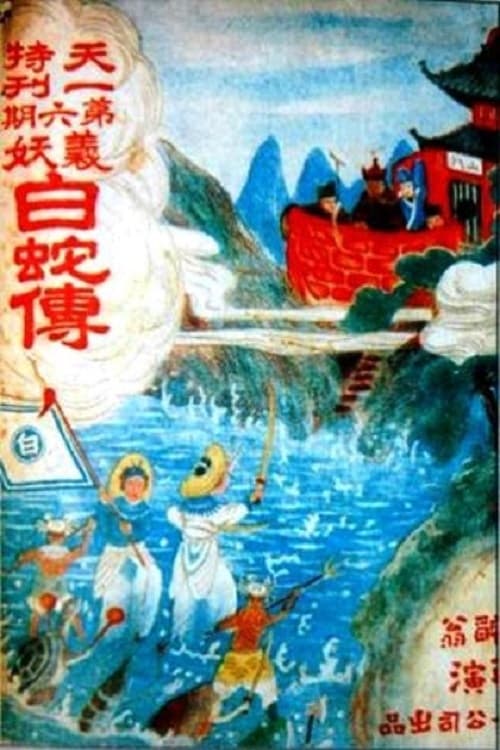
The White Snake
Plot
Get the Weekly Woke Watchlist
New and trending movies scored for woke bias, preachy messaging, and forced political themes — before you waste your evening.
No spam. One useful email per week.
Overall Series Review
Categorical Breakdown
The story is an authentic adaptation of a foundational Chinese folktale featuring Chinese characters. Conflict is driven by human/demon classification and love, not race or immutable characteristics. Casting is culturally authentic to the source material. There is no intersectional lens or vilification of 'whiteness.'
The film is a classic work of Chinese national cinema, faithfully retelling a foundational cultural legend. It celebrates and promotes traditional Chinese folklore, history, and aesthetics. There is no hostility toward its 'home' civilization or ancestors, nor does the Western/alien culture superiority critique apply.
The White Snake is a highly powerful and proactive female protagonist who initiates the relationship, steals a magic herb to resurrect her dead husband, and battles a monk to protect her family. This strength is high on the 'Girl Boss' scale. However, her ultimate aim is traditional love, marriage, and motherhood (she is eventually freed by her son), which grounds her in a complementary, traditional role rather than an anti-natalist 'career is all' trope.
The core of the plot is a passionate, star-crossed, heterosexual pairing that results in marriage and a child (whose eventual birth and maturity become a key plot point in the legend's full cycle). The narrative adheres to a normative structure, centering the male-female pair and the nuclear family as standard. There is no presence of sexual ideology or gender theory lecturing.
The conflict is fundamentally spiritual and supernatural, acknowledging a clear moral law, spiritual merit, and a higher realm of existence. The primary antagonist, Monk Fa Hai, is a figure of Buddhist religion and spiritual power who opposes the demonic union, but this conflict is an internal critique within a transcendent moral framework, not an argument for moral relativism or anti-theism. The narrative simply presents a clash between love and puritanical spiritual duty.
Get the Weekly Woke Watchlist
New and trending movies scored for woke bias, preachy messaging, and forced political themes — before you waste your evening.
No spam. One useful email per week.