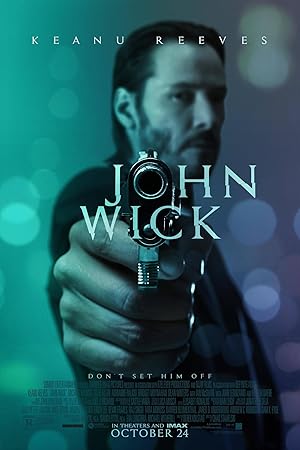
John Wick
Plot
With the untimely death of his beloved wife still bitter in his mouth, John Wick, the expert former assassin, receives one final gift from her--a precious keepsake to help John find a new meaning in life now that she is gone. But when the arrogant Russian mob prince, Iosef Tarasov, and his men pay Wick a rather unwelcome visit to rob him of his prized 1969 Mustang and his wife's present, the legendary hitman will be forced to unearth his meticulously concealed identity. Blind with revenge, John will immediately unleash a carefully orchestrated maelstrom of destruction against the sophisticated kingpin, Viggo Tarasov, and his family, who are fully aware of his lethal capacity. Now, only blood can quench the boogeyman's thirst for retribution.
Get the Weekly Woke Watchlist
New and trending movies scored for woke bias, preachy messaging, and forced political themes — before you waste your evening.
No spam. One useful email per week.
Overall Series Review
Categorical Breakdown
The narrative is universally meritocratic; characters are defined by their reputation, skill, and adherence to the assassin’s code, not by their race or immutable characteristics. Casting is colorblind without lecture. The protagonist’s drive is personal grief and justice, not systemic oppression or a critique of white males.
The film does not contain civilizational self-hatred. It establishes an amoral underworld with its own rigid institutions and rules (The Continental, markers) which are treated with respect as structures that hold chaos at bay. John Wick is motivated by a desire to protect his personal home and the memory of his past life, which honors the idea of a stable sanctuary.
The core motivation for the male hero is his love and fidelity to his deceased wife, Helen, a classic complementarian driver for a man’s action. Feminine characters are not automatically idealized 'Girl Bosses,' but are depicted as competent, yet flawed, operatives within the criminal underworld, judged solely by their actions and competence within the rules of the society.
The narrative’s emotional anchor is the traditional male-female pairing of John and his wife Helen; this is the sole 'family structure' examined in depth. There is no presence of centering alternative sexualities, deconstructing the nuclear family, or engaging in gender theory lecturing.
The film uses language and imagery of traditional faith, such as 'sanctuary' and 'penance,' to build the moral code and rituals of the assassin underworld, implying a transcendent (albeit non-religious) moral law that must be upheld. The conflict is based on a violation of honor and sacred duty, which is the opposite of moral relativism.
Get the Weekly Woke Watchlist
New and trending movies scored for woke bias, preachy messaging, and forced political themes — before you waste your evening.
No spam. One useful email per week.