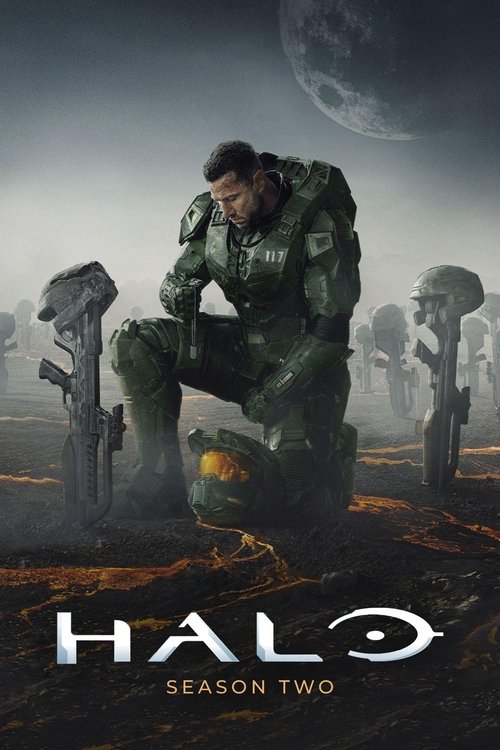
Halo
Season 2 Analysis
Season Overview
In season two, Master Chief John-117 leads his team of elite Spartans against the alien threat known as the Covenant. In the wake of a shocking event on a desolate planet, John cannot shake the feeling that his war is about to change and risks everything to prove what no one else will believe – that the Covenant is preparing to attack humanity's greatest stronghold. With the galaxy on the brink, John embarks on a journey to find the key to humankind’s salvation, or its extinction: the Halo.
Season Review
Categorical Breakdown
Characters like Captain Jacob Keyes and his daughter Miranda Keyes were originally white in the source material, but are cast with actors of color in the series, representing blatant historical 'race-swapping' for diversity. The villainous military leadership figure, Colonel Ackerson, is a white male who actively attempts to sideline the white male protagonist, Master Chief, for the sake of political expediency and self-preservation.
The major internal conflict centers on Master Chief's fight against his own civilization's most powerful institution, the Office of Naval Intelligence (ONI). ONI leadership is shown to be so corrupt and self-serving that it actively covers up a genocidal threat and is willing to sacrifice its own people, portraying the human governing body as a primary, systemic villain.
Female characters are prominently placed in high-ranking military and scientific roles, which is consistent with the established franchise lore. The female Spartans and characters like Miranda Keyes are shown as capable and authoritative, leaning into the 'Girl Boss' trope without a clear, pervasive emasculation of the male hero, whose primary conflict is with a white male officer.
No major subplots, themes, or characters overtly center on alternative sexualities, gender ideology, or the deconstruction of the nuclear family. The sexual element is essentially nonexistent in the narrative focus.
The alien Covenant remains a powerful theocratic empire whose religious zealotry and false prophecy drive its genocidal war against humanity. This indictment of religious fanaticism is consistent with the original source material. The narrative does not contain overt hostility toward traditional Western religion.