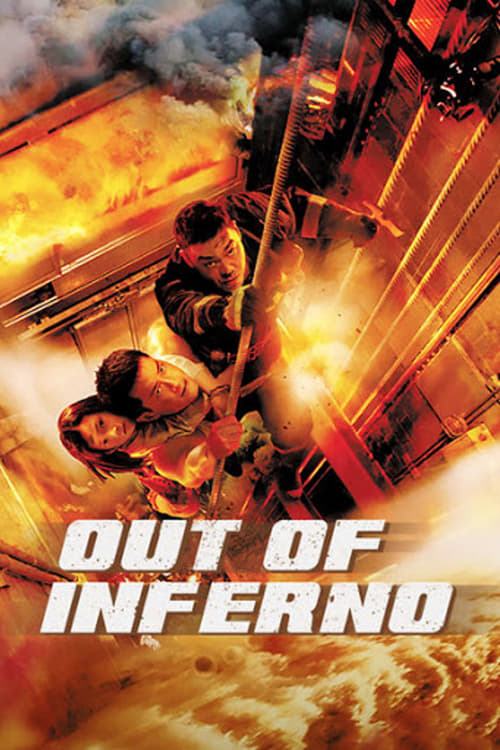
Out of Inferno
Plot
On the hottest day in 50 years, a serious fire incident happened to a busy commercial tower, a gaggle of fire fighters with an indestructible enthusiasm are going to save lives.
Get the Weekly Woke Watchlist
New and trending movies scored for woke bias, preachy messaging, and forced political themes — before you waste your evening.
No spam. One useful email per week.
Overall Series Review
Categorical Breakdown
The movie is a Chinese/Hong Kong production set in Guangzhou featuring an entirely Asian cast. The narrative relies on the universal concepts of brotherly love, professional competence (firefighting and engineering), and courage. Characters are judged solely on their actions during the crisis, not on any immutable characteristics, and the plot contains no lectures on privilege or systemic oppression.
The film centers on the heroism of professional city firefighters and an entire community's survival from a disaster in a modern commercial tower. The premise is a direct celebration of civil duty and the institution of the fire department as a shield against chaos. There is no deconstruction of the city, nation, or culture; the action is focused on protecting the home and its people.
The gender dynamics are explicitly complementarian. The central female character is the pregnant wife of one of the main male heroes, and her survival, along with that of their unborn child, drives much of the husband's heroic action. Masculinity is protective, embodying the fire chief's duty. The female characters are in supporting roles as a pregnant wife and a business partner, and the narrative celebrates motherhood as a high-stakes motivating factor.
The story strictly adheres to a normative structure. The central relationship drama is a heterosexual, married couple reconciling their issues while awaiting the birth of their child. The plot does not feature any alternative sexual or gender identities, nor does it engage in any discussion or deconstruction of the nuclear family.
As a disaster-action film, the focus remains strictly on the physical and moral challenge of saving lives. The film operates under a clear, objective moral law: saving lives is good, and the actions of a selfish few (like a pair of jewel thieves) are clearly presented as wrong. No hostility toward religion is expressed, and a sense of transcendent morality (duty and self-sacrifice) is the core theme.
Get the Weekly Woke Watchlist
New and trending movies scored for woke bias, preachy messaging, and forced political themes — before you waste your evening.
No spam. One useful email per week.