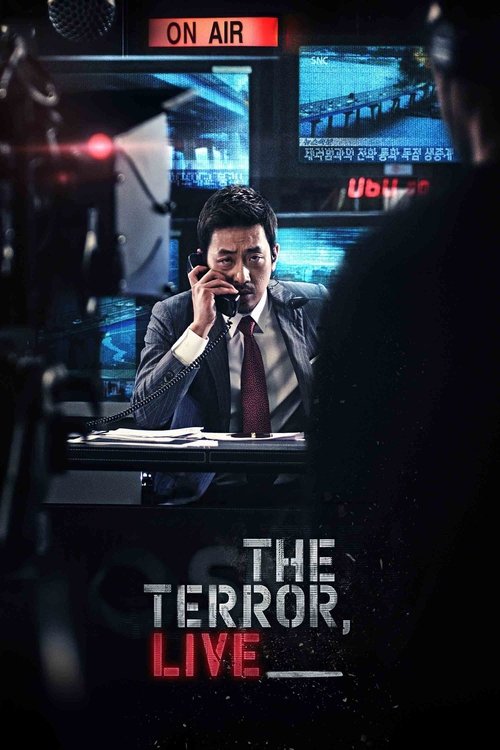
The Terror Live
Plot
A newsman discovers he's been rigged with a bomb after he has an exclusive interview with a terrorist who blew up a bridge.
Get the Weekly Woke Watchlist
New and trending movies scored for woke bias, preachy messaging, and forced political themes — before you waste your evening.
No spam. One useful email per week.
Overall Series Review
Categorical Breakdown
The main conflict is between a cynical elite media anchor and a working-class terrorist demanding justice and compensation for the deaths of laborers due to industrial corruption. The narrative frames the struggle around class disparity and institutional accountability, not race or immutable characteristics. The South Korean casting is colorblind to Western race politics, and the judgment of characters is based on their ambition, greed, and moral action, not intersectional status.
The film delivers a strong, unflinching critique of the home nation’s institutions, portraying the government, media, and social system as fundamentally corrupt, selfish, and avaricious. This sustained attack on the integrity of the nation's contemporary systems, while not aimed at 'Western Civilization,' constitutes a form of intense civilizational self-criticism within its own East Asian context. The plot focuses on institutional failures and social injustice within South Korea.
The movie is a solo male-centric disaster film focused on the news anchor, Yoon Young-hwa. Supporting female roles, such as Yoon's ex-wife and a police official, are pushed to the fringes with minimal character development. The narrative does not feature a 'Girl Boss' trope, nor does it contain any overt anti-family or anti-natal messaging.
The narrative is a tight, real-time thriller centered on a terrorist plot, media coverage, and government response. The film contains no material relating to alternative sexualities, gender ideology, or the deconstruction of the nuclear family. The sexual and gender dynamics remain within the normative structure.
The core thematic critique is secular, focusing on corruption, malfeasance, and the ethical decay of media and government institutions. The story's bleak ending reflects a failure of secular justice, but it does not contain any characters, dialogue, or plot points that are hostile toward religion, specifically Christianity, or that demonize faith. The morality is driven by social and political failures, making it neutral on transcendent faith.
Get the Weekly Woke Watchlist
New and trending movies scored for woke bias, preachy messaging, and forced political themes — before you waste your evening.
No spam. One useful email per week.