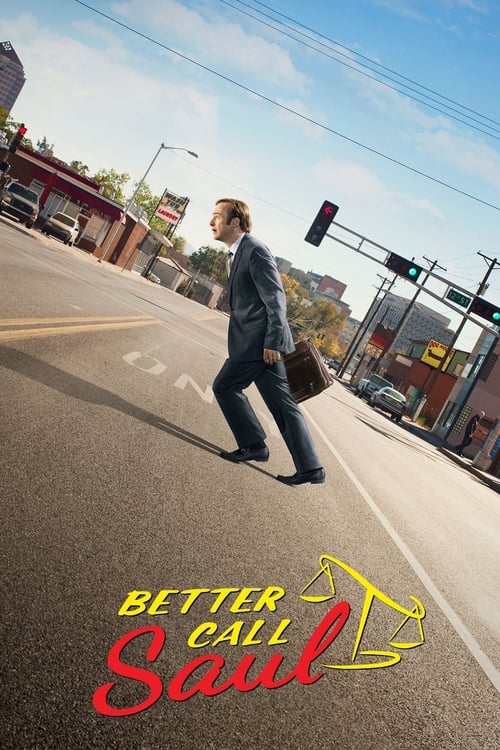
Better Call Saul
Season 2 Analysis
Season Overview
Jimmy McGill returns with a new outlook on life and growing appetites that will push his career -- and his relationships -- into uncharted territory.
Season Review
Categorical Breakdown
The narrative universally applies its moral lens based on character, not immutable characteristics or race. The main conflict involves white characters—Jimmy, Chuck, and Kim—whose struggle is defined by merit versus corruption, and integrity versus cunning. There is no lecturing on privilege, and casting reflects the New Mexico setting without forced diversity or vilification of 'whiteness.' The focus remains on the content of the soul and the individual's ethical choices.
The score is low but not absolute zero because the show offers a persistent, biting critique of American institutions, particularly the corporate legal world and the police. The elite legal establishment, as represented by Chuck and Howard's firm, is depicted as stifling, hypocritical, and elitist, which suggests a critique of a particular societal structure within the Western legal tradition. However, this is a deconstruction of institutional failure, not a broad condemnation of Western civilization, home, or ancestors in the manner of the Noble Savage trope. There is no call for civilizational self-hatred.
Kim Wexler is a highly competent, career-driven female lead who rises from the mailroom to become a top lawyer, and the plot shows her overcoming workplace sexism and professional slight, fitting the 'Girl Boss' mold of professional success. She is a powerful figure whose professional independence is central to her character arc. Her life is intentionally depicted as not revolving around marriage or children, a narrative choice noted by the creators to avoid traditional tropes. However, she is deeply flawed, not a perfect 'Mary Sue,' and the central tragedy of her life is her willing participation in crime, suggesting a character study rather than a feminist lecture.
The season contains no explicit LGBTQ+ themes, main characters, or dialogue that centers on or deconstructs sexuality or gender ideology. The nuclear family structure is not a focus of critique, as most characters are single or in adult-to-adult romantic partnerships, such as Jimmy and Kim. The theme is virtually non-existent, and characters' sexual identity is not a driving narrative force or political statement.
While the show is not explicitly religious, it is profoundly moral and explores objective moral failure, which directly counters moral relativism. Key thematic concepts include guilt, accountability, penance, and the destructive nature of sin. Characters struggle with conscience and are driven by guilt over their actions, such as Mike's anguish over his son's death. The narrative implicitly acknowledges a higher moral law by depicting the psychological and existential cost of moral transgression, making it the opposite of anti-theistic messaging.