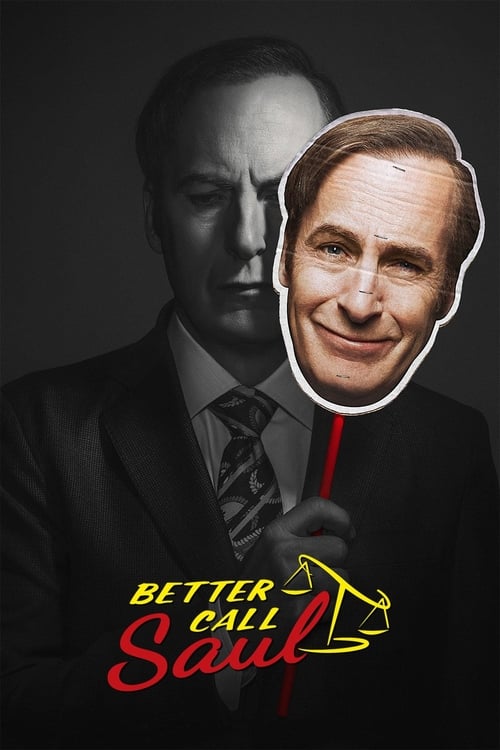
Better Call Saul
Season 4 Analysis
Season Overview
As Jimmy copes with a shocking loss, a series of shady schemes propel him deeper into the criminal world -- and closer to his life as Saul Goodman.
Season Review
Categorical Breakdown
The plot centers entirely on the personal and professional struggles of the main characters, predominantly white males and one white female. Character motivations and conflicts revolve around merit, ambition, professional ethics, and greed. Non-white characters, such as the cartel members Gus Fring and Nacho Varga, are powerful, morally compromised figures judged solely by their efficacy and ambition within the criminal world, not their racial identity. The narrative contains no forced lectures on systemic oppression or white privilege.
The central conflict is a rejection of the legitimacy of the American legal system and its institutions, as Jimmy embraces scamming to bypass the established rules, a theme continued from previous seasons. Chuck McGill, a character who explicitly respected the legal status quo, is dead, leaving the institution to be corrupted by others. However, the narrative is not a broad demonization of 'Western civilization' or American culture. Other cultures (the Mexican cartel) are depicted as a realm of violent chaos, not as spiritually superior 'Noble Savages,' resulting in a very low score.
Kim Wexler is an independent, highly competent lawyer whose story arc is about her professional drive and her complicity in moral corruption, not her role as a wife or mother. She is depicted as a strong professional who is in control of her own story and has distinct agency separate from the male lead. She is not a flawless 'Mary Sue' but a complex, flawed character who makes consequential mistakes. The show generally avoids male emasculation, as the male leads (Jimmy, Mike, Gus) are all highly capable, albeit morally compromised, in their respective fields.
The story does not center on alternative sexualities or gender ideology. The dominant relationship is the traditional male-female pairing of Jimmy and Kim. Gustavo Fring's implied homosexuality is extremely subtle, private, and not used for political commentary or to drive the plot, nor is it central to his identity as a character. The nuclear family is not actively deconstructed, as it is largely absent from the adult protagonists’ lives.
The show presents an explicitly secular moral framework where the legal system fails to provide real justice, and there is no acknowledgment of a higher moral law or divine retribution. Dialogue and plot points underscore a belief in moral relativism and pure chance, where a character's journey is defined by their own choices in a world that lacks ethical compensation or divine oversight. This embrace of a world with 'no divine justice, no karma' places the narrative firmly on the subjective morality end of the spectrum.