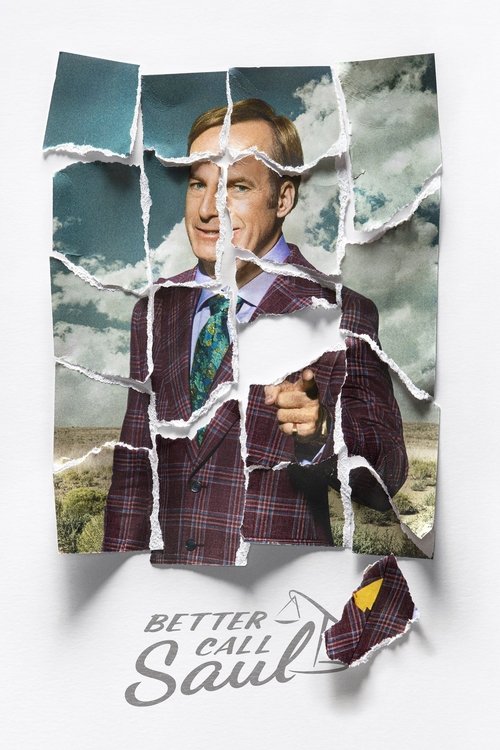
Better Call Saul
Season 5 Analysis
Season Overview
Changing his name to Saul Goodman, Jimmy recruits a new crop of clients. Kim wrestles with a moral dilemma at work. Lalo's feud with Gus heats up.
Season Review
Categorical Breakdown
The narrative is driven entirely by individual choice, ambition, and moral corruption, adhering strictly to character merit and consequence. The protagonist is a white male anti-hero, and the powerful characters (criminal and legitimate) are racially diverse and judged solely on their competence and cruelty, not their immutable characteristics. The casting is naturally reflective of the New Mexico setting and the international drug trade without any forced lecture on systemic oppression.
The central critique is aimed at the corruption within the American legal and corporate systems (like Mesa Verde) and the individual ethical failures of characters like Jimmy, Kim, and Howard. This is a targeted deconstruction of specific, failing institutions and personal morality, not a broad demonization of Western civilization, home culture, or ancestors. The Mexican cartel characters are depicted as ruthless criminals, not 'Noble Savages' or spiritually superior.
Kim Wexler is a strong female lawyer, but her season arc focuses on her willing, enthusiastic descent into moral compromise and law-breaking alongside Jimmy. She is portrayed as a complicated and flawed individual, corrupted by her own ambition and attraction to Jimmy's 'bad choice road,' directly contradicting the 'Mary Sue' or perfect 'Girl Boss' trope. The plot features no explicit anti-natalist or anti-family messaging, though the characters' careerism naturally eclipses family life.
The season contains no overt centering of sexual ideology, no deconstruction of the nuclear family as oppressive, and no lecturing on gender theory. Gus Fring is a major non-heterosexual character whose sexuality is a subtle, character-defining motivation for his criminal empire, but it is a private detail and not the central focus of the story, allowing the plot to adhere to a normative structure without political messaging.
The show is morally grounded in a strict sense of consequence, where poor moral choices spiral into inescapable hell for the characters. This provides an objective moral framework, which works against total moral relativism. However, since the narrative world is completely secular and morality is framed only as personal 'power dynamics' and self-interest (Jimmy's view) rather than a higher moral law, it occupies a 'spiritual vacuum' score. There is no explicit attack on Christianity, but also no faith as a source of strength.