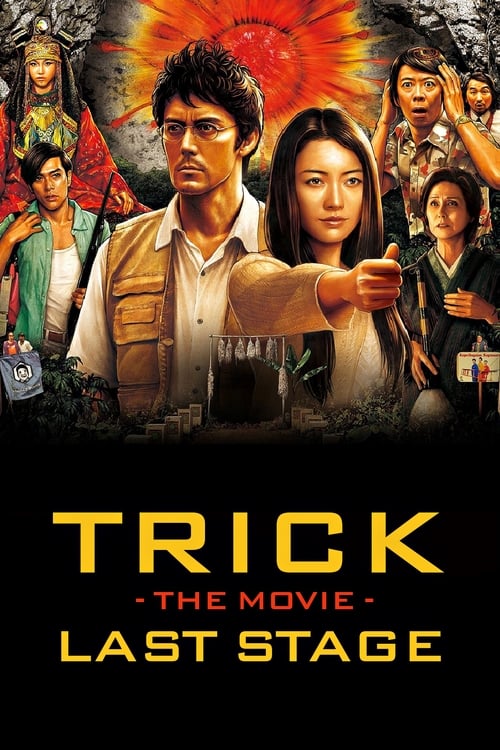
Trick the Movie: Last Stage
Plot
Trade company employee Shinichi recommends to Naoko and Jiro to go to a beautiful place abroad. There, Naoko and Jiro meets tribal shaman and sees through her tricks. The shaman has refused to leave her place.
Get the Weekly Woke Watchlist
New and trending movies scored for woke bias, preachy messaging, and forced political themes — before you waste your evening.
No spam. One useful email per week.
Overall Series Review
Categorical Breakdown
The core plot is a direct confrontation between a corporate entity from a 'developed' nation (Japanese-affiliated trade company) and a tribal community from a less-developed nation over natural resources. The trade company's desire to use violence and explosives to displace the native people for rare earth minerals frames the corporate interest as an oppressor, aligning the narrative with a systemic exploitation/privilege framework based on group identity.
The film heavily indicts a component of the home culture, specifically modern Japanese corporate greed and capitalist exploitation, represented by the trade company's willingness to commit violence for profit. The foreign, tribal culture is presented as morally superior for valuing their land and tradition over modern, material incentives offered by the corrupt home culture's representatives.
The main protagonist, Naoko Yamada, is a self-proclaimed 'super magician' who uses her practical, street-smart genius to consistently solve the mysteries and debunk the frauds. The male lead, Jiro Ueda, is often depicted as an arrogant, bumbling, or easily fooled academic who is frequently corrected, manipulated, and saved by the female lead. The hero is a single woman whose value is entirely defined by her professional competence and talent, fitting the 'Girl Boss' trope at the expense of the male lead’s status.
The narrative's focus remains on the core mystery, debunking spiritualists, and the corporate intrigue. There is no evidence in the plot summary or themes to suggest the centering of alternative sexualities, the deconstruction of the nuclear family, or overt gender theory lecturing. The structure remains largely normative in this regard.
The foundational premise of the entire franchise and this film is that all claims of supernatural power, spiritualism, or miracles—including those of the tribal shaman—are nothing more than fraudulent tricks that can be exposed by rational, empirical skepticism and stagecraft. The narrative strongly rejects the notion of transcendent or objective spiritual truth, framing all faith-based claims as deliberate lies to manipulate the populace.
Get the Weekly Woke Watchlist
New and trending movies scored for woke bias, preachy messaging, and forced political themes — before you waste your evening.
No spam. One useful email per week.