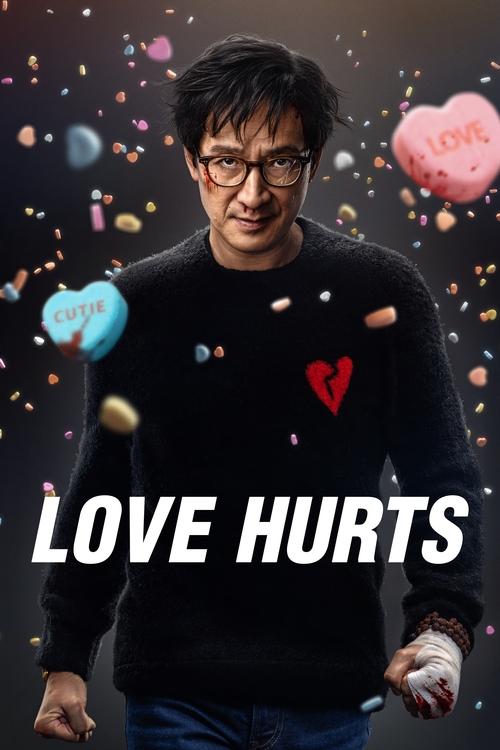
Love Hurts
Plot
A realtor is pulled back into the life he left behind after his former partner-in-crime resurfaces with an ominous message. With his crime-lord brother also on his trail, he must confront his past and the history he never fully buried.
Get the Weekly Woke Watchlist
New and trending movies scored for woke bias, preachy messaging, and forced political themes — before you waste your evening.
No spam. One useful email per week.
Overall Series Review
Categorical Breakdown
The main hero, Marvin Gable, and the main villain, Knuckles, are both played by Asian male actors. The casting is highly diverse, but the characterization focuses on personal choices (kindness versus crime) rather than race or immutable characteristics. There is no plot point or dialogue that lectures on systemic oppression, privilege, or involves the vilification of any specific group.
The central conflict is the protagonist's fight to protect the 'new life' he has created as a successful suburban realtor, explicitly against the chaos of his past crime world. He is motivated by cherishing his quiet life, suggesting a positive view of Western normalcy and institutions (home, job) as a sanctuary from chaos.
The female lead, Rose, is a powerful, take-no-prisoners character who is focused on revenge and manipulating the male lead to fulfill her own goals. While she is a strong woman, she is depicted as 'unhinged' and a destructive force, which deviates from the flawless 'Mary Sue' trope. The movie's romantic theme centers on a traditional male-female pairing, and there is no messaging about career over family or anti-natalism.
The core plot is driven by two traditional male-female romantic pairings. While one supporting character is played by an openly non-binary actor, the on-screen character is presented as female and is involved in a standard heterosexual-presenting love story that is not tied to gender or sexual ideology. The film contains no lecturing on queer theory, deconstruction of the nuclear family, or gender ideology.
The movie operates within a secular framework, with the main character's moral struggle revolving around personal redemption and a desire to be 'kind' and 'good' after a life of crime. The choice is for personal virtue and a life of peace, which aligns with an objective moral law, but there is no explicit discussion or commentary on traditional religion or the role of faith. The world of crime itself serves as the source of evil, not a specific faith.
Get the Weekly Woke Watchlist
New and trending movies scored for woke bias, preachy messaging, and forced political themes — before you waste your evening.
No spam. One useful email per week.