Calculator
Plot
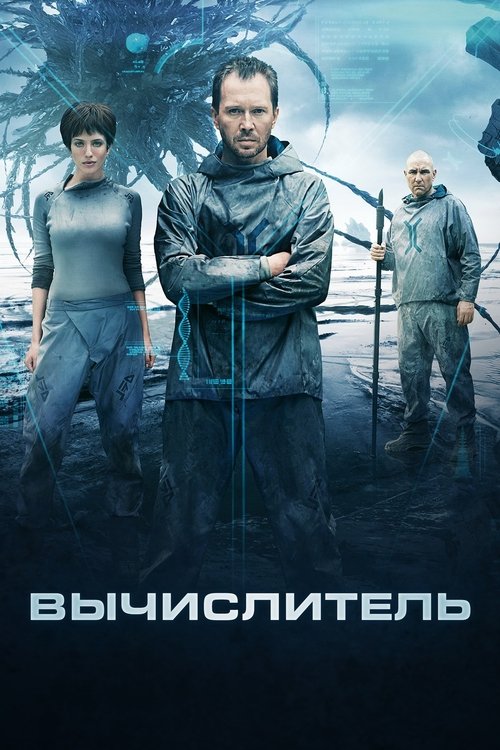
Ten prisoners condemned to exile on a hostile planet XT-59 must pave the way through swamp to reach the Islands of Happiness, the only safe area on the planet, before the harsh climate or the underground horrors kill them all.
Get the Weekly Woke Watchlist
New and trending movies scored for woke bias, preachy messaging, and forced political themes — before you waste your evening.
No spam. One useful email per week.
Overall Series Review
Categorical Breakdown
The casting is colorblind without political commentary. The characters are judged by their actions, intelligence, and criminal/political status, aligning the conflict along a meritocratic axis of intellect (Ervin) versus brute force (Yust). The film does not focus on race, intersectionality, or the vilification of whiteness.
The central conflict involves escape from a dystopian city, which is an oppressive and controlling 'home' civilization with a 'total control' system. The narrative frames this organized society as fundamentally corrupt, with the government and its institutions acting as the primary source of evil and the cause of the protagonist's suffering. The goal is to reach a mythical safe zone outside the civilized area.
The female narrator, Kristi, has a strong backstory as someone who killed her abusive husband. However, within the main plot, she is characterized as a 'damsel in distress' and 'largely helpless' by critics. She relies on the male lead, Ervin, who is the calculating tactician and manipulator, and she functions as his 'foil and love interest.' The gender dynamic features a highly capable, dominant male paired with a dependent female, which avoids the 'Girl Boss' trope.
The narrative centers on a traditional male-female pairing (Ervin and Kristi) and focuses on the high-stakes survival struggle. The story contains no evidence of centering alternative sexualities, deconstructing the nuclear family, or lecturing on gender theory. Sexuality remains a private matter and not a topic of ideological focus.
The film operates in a secular sci-fi setting, with morality focused on situational survival and political treachery. The oppressive force is the government/computer system, not an organized religion. There is no explicit attack on faith or demonization of religious characters, but the moral landscape is subjective and political, lacking any acknowledgment of an objective or transcendent moral law.
Get the Weekly Woke Watchlist
New and trending movies scored for woke bias, preachy messaging, and forced political themes — before you waste your evening.
No spam. One useful email per week.