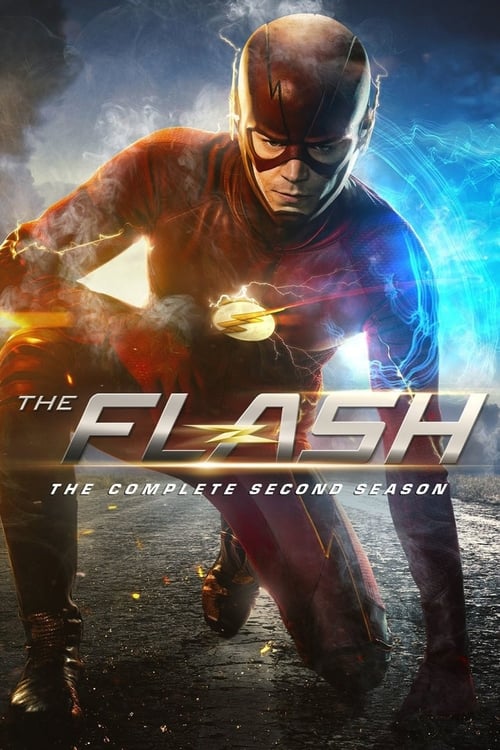
The Flash
Season 2 Analysis
Season Overview
Following the dramatic events of season 1, Team Flash quickly turns their attention to a threat high above Central City. Armed with the heart of a hero and the ability to move at super speeds, will Barry be able to save his city from impending doom?
Season Review
Categorical Breakdown
The lead hero is a white male, and the primary villain is a white male; this does not vilify 'whiteness' as a prerequisite for the plot. The narrative is heavily dependent on a Black family structure, with the main hero raised and mentored by a highly moral, competent Black father figure, Joe West. Other non-white characters are integrated into the main team and given plot relevance. Race and immutable characteristics are visible but do not drive the main conflict or become a platform for lectures on systemic oppression.
The central plot is entirely focused on protecting Central City, its citizens, and the Earth-1 civilization from a destructive extra-dimensional threat. The hero's motivation is driven by familial love and civic duty, consistently viewing his home and city as worthy of saving. The narrative contains no elements of civilizational self-hatred or the demonization of ancestors.
Female leads Iris West and Caitlin Snow are frequently reduced to supporting roles or plot devices for male characters. Iris's career storyline is dropped, and her primary agency is tied to her 'destiny' with the male lead. Caitlin's main arc is centered on a romantic relationship with a man who is secretly the main villain, confirming a trope where the female character's development is secondary to the male villain's introduction. The male lead, Barry Allen, is repeatedly portrayed as highly flawed and makes many 'stupid decisions' throughout the season, which slightly undercuts the 'masculinity is protective' ideal, though he is not a bumbling idiot.
A recurring minor character, Captain David Singh, is openly gay and married. This fact is presented as a normal part of the world, with his marriage mentioned without political fanfare or becoming the center of a narrative. There is no deconstruction of the nuclear family in relation to alternative sexualities, nor is there any presence of gender ideology. The traditional male-female pairing is the clear normative structure for the main characters.
The core of the hero's journey involves learning and adhering to a higher moral code of self-sacrifice and truth, with some episodes specifically engaging with objective ethics, such as Kantian morality. The transcendental element is contained within the science-fiction framework of the 'Speed Force,' a secularized, mysterious energy source sometimes compared to a spiritual entity. The show does not portray traditional religion as the root of evil, but rather presents a secular version of objective moral law.