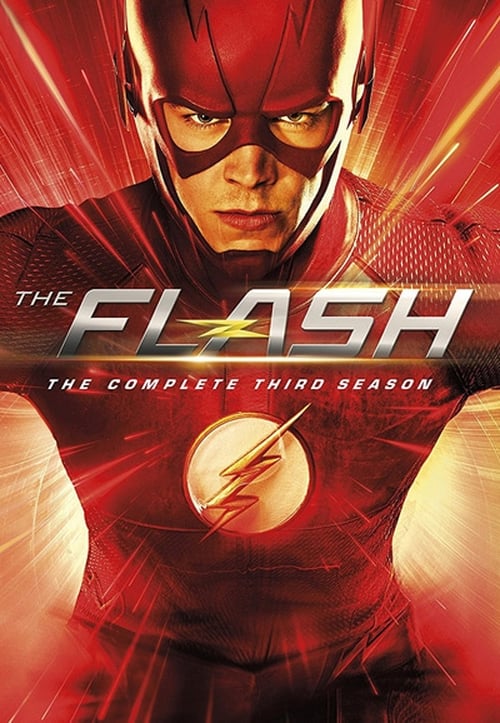
The Flash
Season 3 Analysis
Season Overview
Forensic scientist Barry Allen, aka The Flash, is living his dream life. His parents are alive. He's dating beautiful, smart Iris West. And he's able to stand back and let the new speedster in town, Kid Flash, step in to protect Central City. But the better Barry's life gets, the more dangerous it becomes. His nemesis, Reverse Flash, warns Barry of serious repercussions if he remains in the alternate Flashpoint universe: In addition to memory loss, his powers will fade. When disaster strikes, Barry must decide whether to continue life as Barry Allen or return to his universe as The Flash. As Barry deals with his identity crisis, he and the S.T.A.R. Labs team fight off lethal threats from the God of Speed, Savitar.
Season Review
Categorical Breakdown
The main hero, a white male, remains the undisputed center of the story, with the narrative prioritizing his emotional and heroic arc. A black male character, Wally West/Kid Flash, is introduced as a peer but is repeatedly sidelined, outmatched, or ‘worfed’ by Barry Allen. Iris West, a black female character, is the primary plot device, serving as the victim-to-be that the protagonist must save, which undercuts any push toward elevating her through an intersectional lens. The storyline does not contain lectures on privilege or systemic oppression.
The central conflict is Barry Allen's moral dilemma over altering the past to fix his own family trauma (saving his parents), which is revealed to have negative, cascading consequences for his friends, family, and the established reality. This narrative endorses the virtue of accepting one's inherited reality and the importance of the nuclear family/found family unit as a shield against chaos. There is no element of civilizational self-hatred or demonization of Western heritage; the focus is on maintaining the stability of the home reality (Earth-1).
The main female lead, Iris West, is entirely relegated to the 'damsel in distress' role for the duration of the season, a concept fundamentally opposed to the 'Girl Boss' trope. The entire plot is predicated on the male hero saving his romantic partner, reinforcing a traditional protective dynamic. Caitlin Snow's power-gaining arc culminates in her becoming the villainous Killer Frost, which is tied to the main male villain, Savitar, and a male scientist's attempt to 'fix' her, severely limiting female agency. There is little focus on career fulfillment over the traditional romantic goal of marriage.
The season is overwhelmingly focused on the heterosexual romance between Barry Allen and Iris West. Previous male-male relationships in the background cast (Captain Singh, Hartley Rathaway) are either absent or minimized to fleeting appearances in this season's central plot, which keeps alternative sexualities from being centered. The story completely lacks any themes of gender theory or deconstruction of the nuclear family structure.
The primary conflict is a fight for the moral soul of the main hero against a version of himself (Savitar) who has embraced nihilistic pride and declared himself a 'god.' This character arc functions as an exploration of personal sin (hubris, self-pity) and redemption, with the villain representing an ultimate moral failure derived from an inability to forgive oneself. This structure emphasizes an Objective Truth and Transcendent Morality (the rightness of humility and sacrifice) rather than promoting moral relativism or attacking religion.