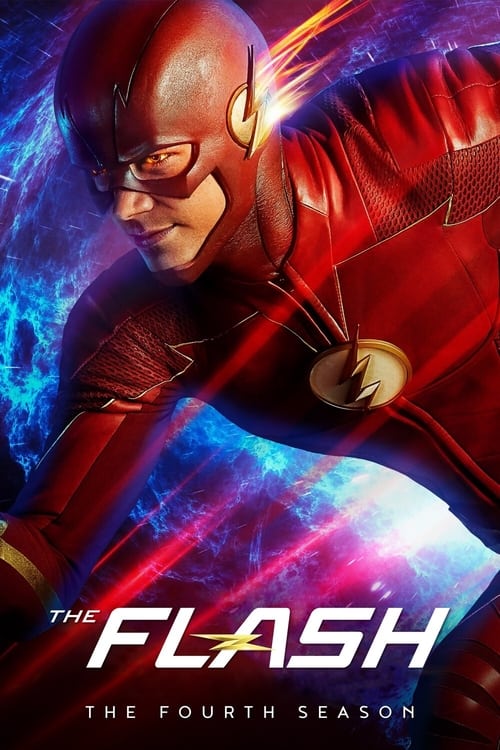
The Flash
Season 4 Analysis
Season Overview
The mission of Barry Allen, aka The Flash, is once more to protect Central City from metahuman threats. But with Barry trapped in the Speed Force, this mission falls to his family – Detective Joe West; fiancée Iris West; and Wally West/Kid Flash – and the team at S.T.A.R. Labs: Caitlin Snow/Killer Frost, Cisco Ramon/Vibe and brilliant scientist Harrison Wells. When a powerful villain threatens to level the city unless The Flash appears, Cisco risks everything to free Barry. But this is only the first move in a deadly game with Clifford DeVoe, aka The Thinker, a mastermind who’s always ten steps ahead of Barry, no matter how fast Barry runs.
Season Review
Categorical Breakdown
The narrative places a significant emphasis on a 'team' effort led by Iris West, a black woman, declaring, 'We are the Flash.' This functions to diminish the unique merit of the white male protagonist's singular role, though Barry Allen remains an indispensable hero. Casting is established and diverse, featuring an interracial core family, which is presented as the unquestioned standard. The narrative itself does not introduce lectures on systemic oppression or white privilege, but the intentional redistribution of the title hero's significance among the team's diverse members aligns with intersectional hierarchy over individual merit.
The central villain, Clifford DeVoe, is a disgruntled Western intellectual who views human civilization and emotion as corrupt and flawed, seeking to regress all of humanity to a simplified state. The heroes' mission is explicitly a defense of Central City, the American nuclear family (Joe/Cecile, Barry/Iris), and the messy, emotional vitality of humanity as it is. The storyline frames the established institutions and the human spirit as objects of salvation, not corruption.
The season aggressively promotes Iris West's transition into the 'Team Leader' and 'Boss' role, which critics noted felt jarring and unwarranted by her previous character arc. This is reinforced by the highly criticized 'Girls Night Out' episode, which pushes explicit, clumsy 'hashtag-feminism' dialogue and tropes, all while paradoxically depicting the female characters as incompetent at apprehending the villain. The white male protagonist, Barry Allen, is consistently framed as needing the emotional and motivational guidance of his wife, Iris. However, the plot line for Joe and Cecile West celebrates a new pregnancy and motherhood, which acts against the anti-natal message.
The season's main cast and core family dynamics are centered on heterosexual relationships and the nuclear family structure. Alternative sexualities are present but not the focus of the main plot. Captain David Singh, a recurring character, is shown to be a gay man in a stable, established relationship, which is normalized without being the center of any ideological lecturing. A guest appearance by Captain Cold references his upcoming gay wedding. The overall structure maintains a normative standard, with inclusivity reserved for background or crossover elements.
The primary philosophical conflict is between the villain's extreme intellectual pessimism and moral relativism, which dismisses human emotion and free will, versus the hero's core values of hope, faith, and love. The narrative repeatedly champions a transcendent morality where selfless love and fighting for the universal good are the ultimate sources of strength. Explicit references to organized religion are minimal, and there is no overt hostility toward Christianity or traditional faith; instead, an abstract 'faith' and 'hope' are presented as the spiritual shields against the villain's nihilism.