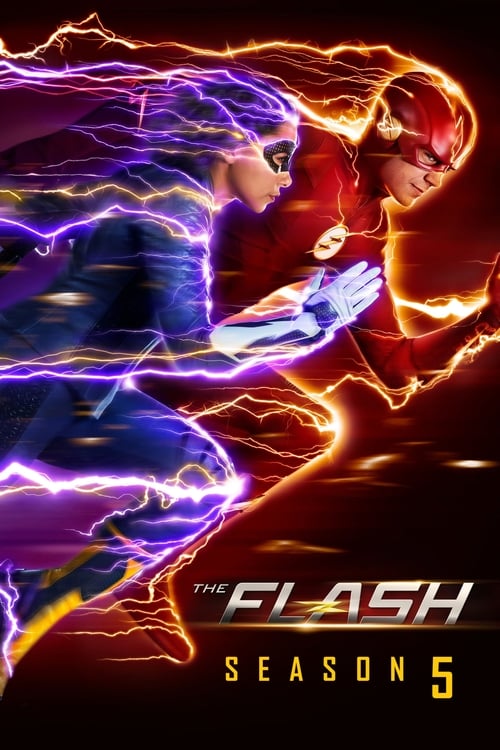
The Flash
Season 5 Analysis
Season Overview
Barry Allen and his new wife, Iris West, finally settling into married life when they're visited by Nora West-Allen, their speedster daughter from the future. Nora's arrival brings to light the legacy every member of Team Flash will leave years from now, causing many to question who they are today. And while Nora idolizes Barry, she holds a mysterious grudge against Iris. As Team Flash adjusts to the next generation of speedster, they discover Nora's presence has triggered the arrival of the most ruthless, vicious and relentless villain they have ever faced: Cicada!
Season Review
Categorical Breakdown
The core couple is an interracial marriage (White male lead, Black female lead) and their daughter is mixed-race, which is presented as a neutral fact of the family structure. The main villain, Orlin Dwyer/Cicada, is framed as a 'grizzled, blue-collar everyman' who becomes a vengeful serial killer against metahumans, a conflict allegorical to identity-group hatred. This trope depicts a working-class, traditional-minded male as the source of societal bigotry and violence. However, the primary focus remains on a moral conflict (meta-cure ethics) rather than explicit lectures on racial privilege or systemic oppression.
The season's conflict is entirely internal to Central City society, revolving around the ethics of metahumans and the family legacy of Barry and Iris. There is no discernible plot element that expresses hostility toward Western civilization, one's home, or ancestors. The show centers on protecting the city's inhabitants and affirming the family unit, which positions institutions as a shield against chaos. Gratitude and respect for the main characters' own history and ancestors (Joe West, Henry Allen) are constant themes.
Iris West-Allen receives a major 'Girl Boss' arc by founding *The Central City Citizen*, establishing her professional career as central to her identity. Her future self is revealed to have unilaterally chosen to suppress her daughter Nora’s powers to protect her, an act of anti-natalist-adjacent control that frames the mother's career-focused protectiveness as a source of familial conflict. The daughter, Nora, is a powerful new female speedster, though critics describe her development as often childish and impulsive, undercutting the perfect 'Mary Sue' trope. The plot features powerful, professional women driving major decisions (Iris, Nora, Caitlin, Cicada II/Grace).
The season’s new, prominent hero, Nora West-Allen, is confirmed to be a lesbian, and this is integrated into the character's life through a brief romantic plot line with a villain-of-the-week. The inclusion centers an alternative sexuality as a natural, unremarked-upon part of the main hero's identity. This centering of an LGBTQ+ identity for a main character, following a pattern in the connected universe, elevates the score significantly, though it does not reach the level of a full narrative lecture on gender ideology.
The main villain, Cicada, is a secularized serial killer driven by personal revenge and anti-metahuman prejudice, unlike his comic book counterpart, who led a cult. The primary moral dilemmas involve the ethical debate over a meta-human cure (forced conversion vs. free will/consent), which are secular-humanist concerns. There is no specific critique or vilification of traditional religion, faith, or Christian characters, keeping this score very low.