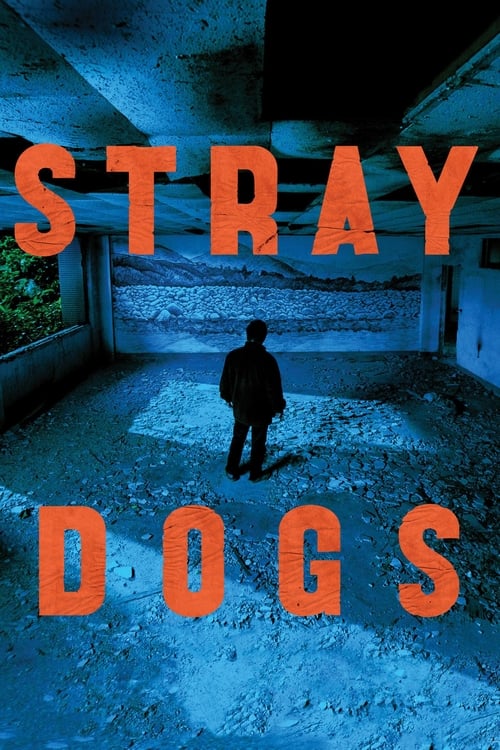
Stray Dogs
Plot
An alcoholic man and his two young children barely survive in Taipei. They cross paths with a lonely grocery clerk who might help them make a better life.
Get the Weekly Woke Watchlist
New and trending movies scored for woke bias, preachy messaging, and forced political themes — before you waste your evening.
No spam. One useful email per week.
Overall Series Review
Categorical Breakdown
The narrative centers on a non-Western, Asian family struggling with poverty in a contemporary Taiwanese city. Character struggles are framed by economic hardship, alcoholism, and isolation, not by an intersectional hierarchy of race or privilege. There is no attempt to vilify white people or enforce a political diversity quota.
The film strongly criticizes the modern, indifferent Taiwanese urban society by showing the family's life in leaky, dilapidated structures and abandoned spaces. This constitutes a severe critique of the 'home culture' in its contemporary form of urban neglect and material indifference. It is a critique of the present-day environment, not a demonization of the nation's historical ancestors or heritage.
The father is portrayed as an emasculated figure, broken by alcoholism and depression, who struggles to provide for his children. However, the film's female characters are not depicted as perfect 'Girl Bosses,' but rather as elusive maternal figures whose absence or presence is linked to the family’s emotional survival. The film mourns the lost nuclear family structure, emphasizing the need for a mother figure rather than promoting anti-natalism or career over family.
The story strictly follows the dynamic of a broken nuclear family—a father and his two young children—and their desperate need for a maternal figure, which appears in the form of a sympathetic grocery clerk and spectral visions of the children's mother. Sexual or gender ideology is not a component of the narrative, which remains focused on poverty and the basic emotional needs of the children.
The core theme is one of cosmic indifference and existential despair, with the title referencing a Taoist concept suggesting that 'Heaven and Earth are heartless.' This portrays a profound spiritual vacuum and the moral relativism of survival (stealing food) but does not contain explicit hostility toward traditional religion, nor does it feature Christian characters as villains or bigots.
Get the Weekly Woke Watchlist
New and trending movies scored for woke bias, preachy messaging, and forced political themes — before you waste your evening.
No spam. One useful email per week.