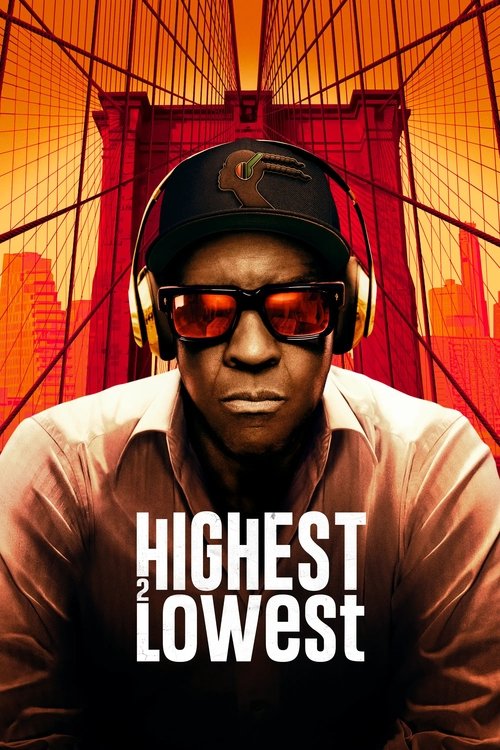
Highest 2 Lowest
Plot
When a titan music mogul, widely known as having the "best ears in the business", is targeted with a ransom plot, he is jammed up in a life-or-death moral dilemma.
Get the Weekly Woke Watchlist
New and trending movies scored for woke bias, preachy messaging, and forced political themes — before you waste your evening.
No spam. One useful email per week.
Overall Series Review
Categorical Breakdown
The film reinterprets a classic story with a predominantly Black cast, making the core conflict explicitly about socioeconomic and racial disparity in New York City. The kidnapped boy is the son of the driver, who is framed as a close friend but a 'second-class citizen' whose tragedy is secondary to the mogul’s financial crisis. The narrative is openly a critique of the intersection of race and class, showcasing the systemic gap between the wealthy Black elite and the working class.
The film is not about wholesale civilizational self-hatred, but it leverages a critique of American capitalism and its resulting wealth disparity, which is the central conflict in the plot. The 'highest' part of the American dream is portrayed as existentially corrupting, putting the life of an innocent child at risk due to the mogul’s ruthless pursuit of money. However, the film is also a 'love letter to NYC's sports and its music,' showing an appreciation for home culture.
The primary roles and dramatic conflict center on male figures: the mogul, the driver, and the kidnapper. The mogul's wife is a key figure who argues the moral case but is not portrayed as a 'Girl Boss' or 'Mary Sue'. There is no thematic focus on emasculation of males or any overt anti-natalist messaging. The central focus is the protection of the son and godson.
The narrative focus is on a traditional crime thriller plot centered on a kidnapping and a rich family's moral crisis. The character relationships revolve around the nuclear family unit and professional relationships. There is no information suggesting the centering of alternative sexualities, deconstruction of the nuclear family, or promotion of gender ideology.
The core of the movie is a 'life-or-death moral dilemma' that forces the main character to confront his values. Dialogue explicitly stresses 'integrity' and 'what you actually believe in' as being more important than money, suggesting a belief in objective moral law and virtue. This structure supports transcendent morality rather than embracing subjective 'power dynamics' or vilifying religion.
Get the Weekly Woke Watchlist
New and trending movies scored for woke bias, preachy messaging, and forced political themes — before you waste your evening.
No spam. One useful email per week.