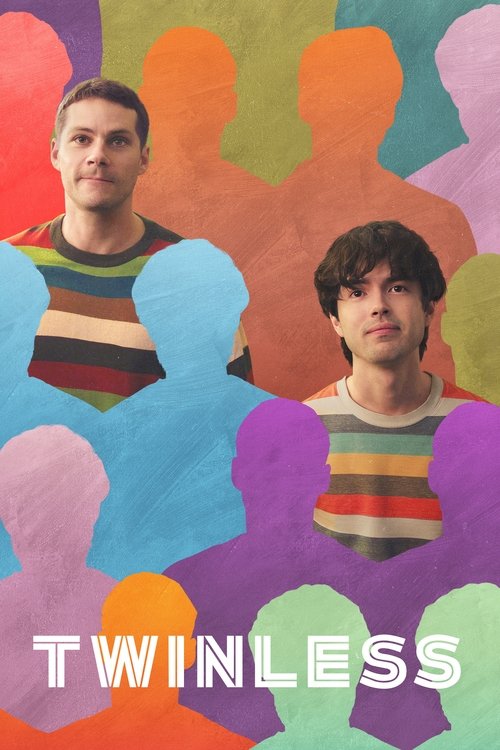
Twinless
Plot
Two men who lost their respective twin brothers develop a growing friendship after meeting in a support group. However, both harbor long-hidden secrets that threaten to tear them apart.
Get the Weekly Woke Watchlist
New and trending movies scored for woke bias, preachy messaging, and forced political themes — before you waste your evening.
No spam. One useful email per week.
Overall Series Review
Categorical Breakdown
The straight protagonist, Roman, is a "decidedly hetero tradie life" type who is characterized as being "not exactly bright" and struggling with "explosive anger issues." This is contrasted with his dead twin Rocky and his new friend Dennis, both of whom are gay, and described as "smart, cultured, travelled" and successful. The straight, working-class male is depicted as the emotionally damaged and intellectually inferior figure compared to his gay counterparts.
The traditional American identity associated with Roman's "hometown Idaho" and "tradie life" is the source of his emotional baggage, "male insecurities," and "violent streak." His twin, Rocky, lived "out and proud in Portland," representing a more progressive cultural space. The narrative frames the traditional male identity as fundamentally flawed and something Roman must flee from to find connection.
The main focus is on the toxic, co-dependent relationship between two men, not on gender politics. Roman's girlfriend, Marcie, is portrayed as an idealized female figure, described as "kind and incredibly understanding" and quick to forgive. The emasculation of the male is present in Roman, but it stems from his psychological damage and comparison to the gay characters, not from a dominant female "Girl Boss."
Alternative sexuality is a fundamental, non-negotiable component of the plot. The entire friendship centers on the connection between a straight man (Roman) and an openly gay man (Dennis) who becomes obsessed with Roman's dead twin. The major plot twist is driven by Dennis's lie, which is motivated by his previous fling with Roman's deceased gay twin, Rocky, and his need for a surrogate. The movie contains "extended graphic sexual content" and is framed as a key work of "queer cinema."
The core of the movie's philosophy is moral and ontological relativism, as the character Dennis questions the very nature of objective self-identity by asking, "What version of me? I hate most of them." The movie handles themes of profound grief, betrayal, and forgiveness entirely through psychological self-help and human relationships, never introducing a transcendent or religious moral framework. The only religious reference is a sarcastic phrase repeated by Roman, subverting a more familiar spiritual concept.
Get the Weekly Woke Watchlist
New and trending movies scored for woke bias, preachy messaging, and forced political themes — before you waste your evening.
No spam. One useful email per week.