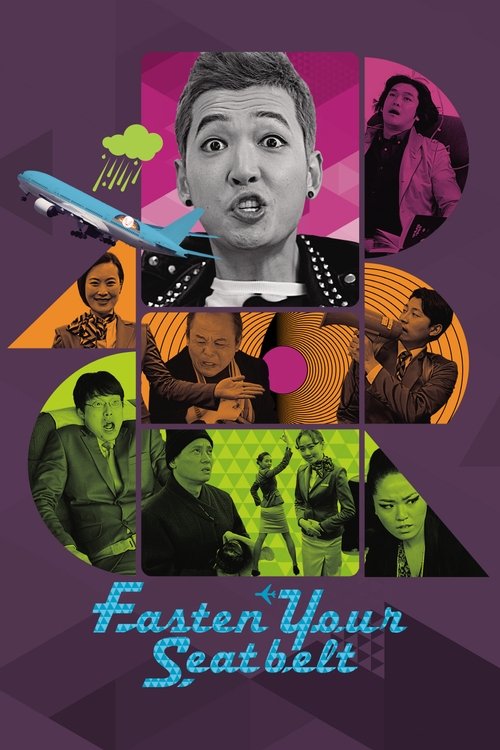
Fasten Your Seatbelt
Plot
Hallyu star Ma Joon-Gyu boards an airplane that will take him from Tokyo to Seoul, but the plane is soon swept up into a typhoon and faces danger.
Get the Weekly Woke Watchlist
New and trending movies scored for woke bias, preachy messaging, and forced political themes — before you waste your evening.
No spam. One useful email per week.
Overall Series Review
Categorical Breakdown
The movie is a South Korean production featuring an all-Asian cast on a flight between Tokyo and Seoul, meaning the narrative does not engage with Western concepts of race, whiteness, or intersectional politics. The satire focuses on class and celebrity status, judging characters based on their merit and behavior during the crisis, not their immutable characteristics. The film's casting is purely authentic to its geographical and cultural setting.
The film is a South Korean product that gently satirizes the superficiality of celebrity and the social hierarchy of its home country's modern culture, using the plane as a 'microcosm of modern-day South Korea'. This mild social critique of contemporary issues does not constitute civilizational self-hatred, nor does it demonize ancestors or Western culture.
The main male character, the Hallyu star, is described as having 'recent problems with women and ongoing scandals'. He also attempts awkward romantic advances toward a 'pretty but overly sheepish Japanese stewardess'. This leans into a traditional and mildly cringey male-centric view of women as objects of romantic pursuit or sources of his personal problems. However, the female characters in the crew, like the 'equally persuasive head stewardess', display professional competence. The narrative is not centered on anti-natalism, motherhood critique, or the 'Girl Boss' trope; the score is low because the tropes are incidental and not a core, lecturing theme.
The narrative is a straight-forward disaster-comedy focusing on a celebrity, passengers, and a typhoon. No plot points or character descriptions mention alternative sexualities, deconstructing the nuclear family, or gender ideology. The movie is focused on the primal fear of death and the panic of a celebrity.
One of the supporting characters is an 'outlandish monk' who is used for comedic relief, including singing pop songs. This trivializes a religious figure for humor, which is a mild form of anti-theistic sentiment, but it does not frame religion as the root of evil or cast religious characters as bigots. The morality of the film is determined by universal reactions to a life-threatening crisis, acknowledging a higher pressure (death) but not an objective moral truth.
Get the Weekly Woke Watchlist
New and trending movies scored for woke bias, preachy messaging, and forced political themes — before you waste your evening.
No spam. One useful email per week.