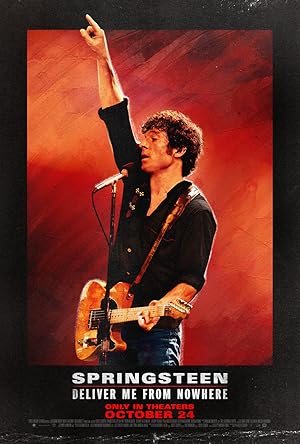
Springsteen: Deliver Me from Nowhere
Plot
Bruce Springsteen's journey crafting his 1982 album Nebraska, which emerged as he recorded Born in the USA with the E Street Band. Based on Warren Zanes' book.
Get the Weekly Woke Watchlist
New and trending movies scored for woke bias, preachy messaging, and forced political themes — before you waste your evening.
No spam. One useful email per week.
Overall Series Review
Categorical Breakdown
The film is a biopic focused on a white male artist’s personal, psychological, and creative journey. The casting is historically authentic to Bruce Springsteen and his real-life family and associates. The central conflict revolves entirely around the artist's individual merit and internal struggles, with no evidence of race-swapping or intersectional political lecturing.
The narrative explores the themes of the 'Nebraska' album, which depict 'ordinary people who were crushed between the promise of the American dream and the reality of economic and moral collapse.' This is a deep, personal critique of systemic and economic failure in the United States, which is a form of self-examination and disillusionment, not a wholesale demonization or civilizational self-hatred.
The main female presence is the fictional love interest, Faye Romano, a single mother with a young daughter. Her role is criticized in commentary for being a 'cliché storyline' and a 'narrative crutch,' which prevents her from achieving the status of a 'Girl Boss' or 'Mary Sue.' The film explores historical family trauma involving the father, but this is a specific biographical conflict, not a message of universal male incompetence or toxicity.
The movie is a focused period biopic about a cisgender, heterosexual artist's intimate life in 1982. The plot centers on his family history and a fictional, heterosexual romantic relationship. There is no presence of alternative sexual ideologies, deconstruction of the nuclear family, or gender theory lecturing in the plot summary or thematic analysis.
The core source of the music, the *Nebraska* album, and the film’s narrative deal with themes of lost souls, quiet despair, and a search for belief. The film is directly influenced by the short stories of Christian writer Flannery O'Connor, which places the moral struggle within a framework that implicitly acknowledges sin and the need for forgiveness, rather than outright hostility toward faith.
Get the Weekly Woke Watchlist
New and trending movies scored for woke bias, preachy messaging, and forced political themes — before you waste your evening.
No spam. One useful email per week.