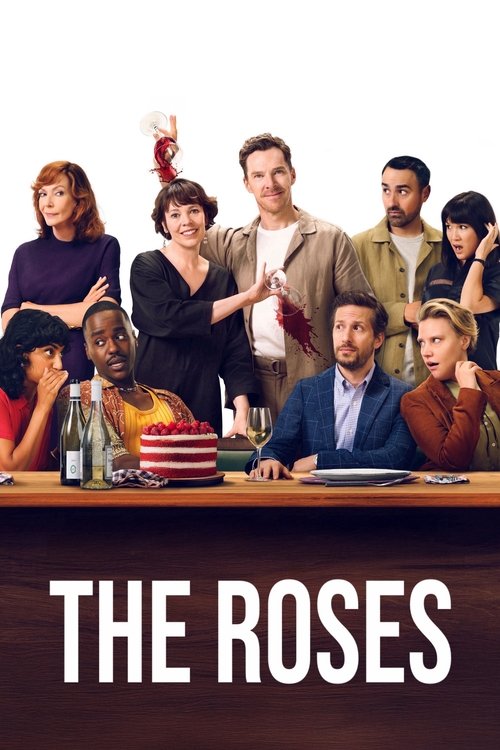
The Roses
Plot
Life seems easy for picture-perfect couple Ivy and Theo: successful careers, a loving marriage, great kids. But beneath the façade of their supposed ideal life, a storm is brewing – as Theo's career nosedives while Ivy's own ambitions take off, a tinderbox of fierce competition and hidden resentment ignites.
Get the Weekly Woke Watchlist
New and trending movies scored for woke bias, preachy messaging, and forced political themes — before you waste your evening.
No spam. One useful email per week.
Overall Series Review
Categorical Breakdown
The film centers on the marital and professional conflict of two wealthy, white, heterosexual professionals. The plot focuses on their ego and professional ambition, not on racial or intersectional hierarchy. The conflict is based on career merit and resentment, not systemic oppression. The casting of the leads is white, and the diverse supporting cast is secondary to the main drama.
The narrative satirizes the materialistic aspects of modern, upper-class Western life, using the destruction of the luxury family home as a centerpiece for the couple's decay. The critique is aimed at the internal rot of a Western institution (marriage and careerism) but does not frame the home culture as fundamentally corrupt or racist. The film lacks any depiction of external cultures being morally superior.
The conflict is explicitly driven by the reversal of stereotypical gender roles, highlighting the 'fragility of the male ego' as Theo becomes the stay-at-home father. The narrative portrays the man, Theo, as a 'resentful beta-male loser' whose self-worth collapses with his career, while the woman, Ivy, achieves great career success. Motherhood is shown to conflict with the pursuit of a career, as Ivy expresses guilt over neglecting her children due to her professional ascent.
The film focuses entirely on the destructive nature of the traditional, monogamous, male-female pairing and the nuclear family unit. There is no inclusion of alternative sexualities, deconstruction of gender through non-biological means, or lecturing on gender theory. The core structure is heteronormative.
The movie operates within a framework of moral relativism where both characters are equally destructive and morally 'grey,' prioritizing material and psychological warfare over any higher moral law. The story exists in a spiritual vacuum centered on ego and material success. There is no explicit hostility toward organized religion, specifically Christianity, in the plot or character motivations.
Get the Weekly Woke Watchlist
New and trending movies scored for woke bias, preachy messaging, and forced political themes — before you waste your evening.
No spam. One useful email per week.