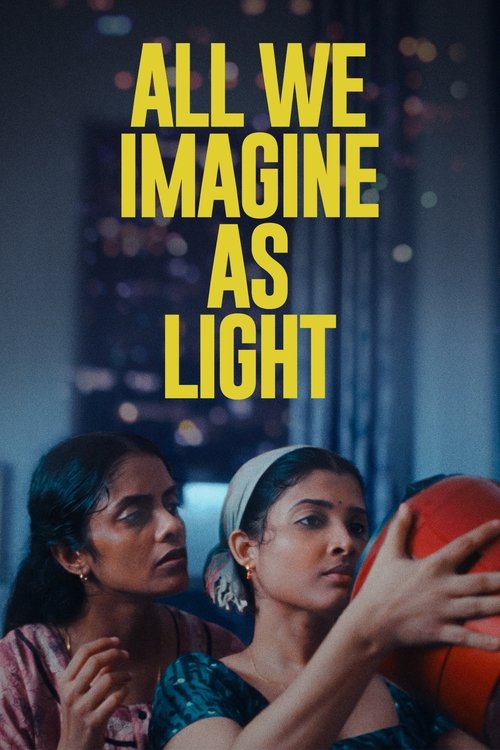
All We Imagine as Light
Plot
In Mumbai, Nurse Prabha's routine is troubled when she receives an unexpected gift from her estranged husband. Her younger roommate, Anu, tries in vain to find a spot in the city to be intimate with her boyfriend. A trip to a beach town allows them to find a space for their desires to manifest.
Get the Weekly Woke Watchlist
New and trending movies scored for woke bias, preachy messaging, and forced political themes — before you waste your evening.
No spam. One useful email per week.
Overall Series Review
Categorical Breakdown
The plot is heavily reliant on identity and intersectional hierarchy, focusing on the marginality and systemic oppression faced by working-class, migrant women across the lines of class, language, and caste. The core romantic subplot is a critique of a specific form of right-wing intolerance that weaponizes religious identity (Hindu/Muslim) in India. The narrative explicitly highlights social schisms and political undertones related to 'privilege and marginality,' though it does not involve the vilification of 'whiteness' or 'race-swapping' as the conflict is internal to Indian society.
The film critiques the modern, capitalist Indian megalopolis of Mumbai, framing it as a 'post-colonial city' built 'purely for capitalism' and a place of urban loneliness, disconnection, and 'illusion.' The system is depicted as corrupt, forcing the working class into displacement, and one character critiques developers who think they 'can replace God' with their skyscrapers. This constitutes a significant hostility toward the modern national and urban culture, finding solace and hope only by retreating to a more communal, less corrupted village setting.
The film is widely recognized as a deeply feminist narrative that centers 'female solidarity' and 'autonomy' in the face of 'patriarchal expectations' and 'gendered structures.' The story is entirely driven by the women's emotional and professional journeys as they seek 'personal autonomy and freedom.' The female leads are portrayed as victims of unfulfilling, distant, or socially restrictive traditional male-female relationships, suggesting that the path to fulfillment lies in sisterhood and personal desire outside of normative family structures.
The primary romantic and familial structures presented in the film are traditional male-female pairings (marriage, dating). There is no explicit presence of alternative sexualities, gender ideology, or deconstruction of the nuclear family beyond the complications of an interfaith relationship and an absent husband. The narrative adheres to a normative structure, with conflicts arising from societal and religious restrictions on that structure, not from a critique of heteronormativity itself.
There is no direct hostility or vilification of religion. The one explicit reference is a critique of materialist hubris, where real estate developers are accused of thinking they 'can replace God' with their towering structures. The narrative contains moments of 'dreamlike incandescence' and a spiritual-like revelation for a main character, suggesting a search for transcendent meaning. The couple's romantic tryst near 'forgotten idols' suggests a shift away from institutional religion toward a more personal, perhaps pre-modern spiritual space, which is not an embrace of moral relativism or anti-theism.
Get the Weekly Woke Watchlist
New and trending movies scored for woke bias, preachy messaging, and forced political themes — before you waste your evening.
No spam. One useful email per week.