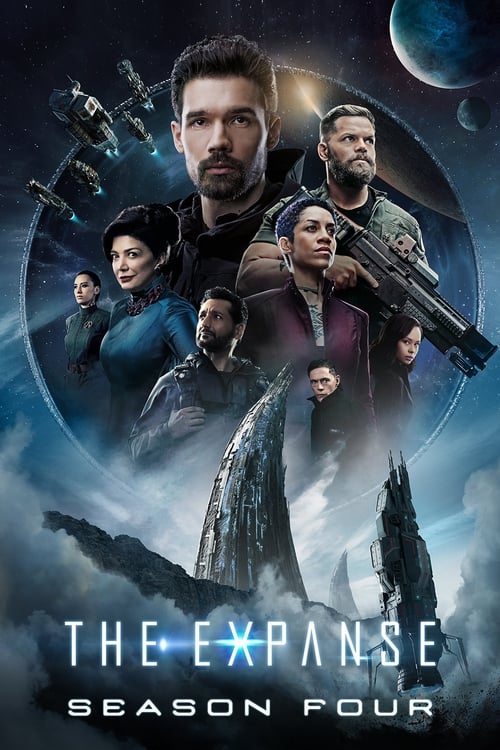
The Expanse
Season 4 Analysis
Season Overview
With the Ring Gates now open to thousands of new planets, a blood-soaked gold rush begins, igniting new conflicts between Earth, Mars, and the Belt. Meanwhile, on one unexplored planet, the Rocinante crew gets caught in a violent clash between an Earth mining corporation and desperate Belter settlers as deadly, new threats from the protomolecule emerge.
Season Review
Categorical Breakdown
The core plot focuses on the oppressed Belter identity clashing with the privileged, colonial Earther corporation. The main human villain, the RCE security chief, is a white male figure who embodies corporate and Inner Planet ruthlessness. However, the show's overall message advocates for rejecting *all* tribalism (Earther, Martian, Belter) in favor of a universal human identity.
The dominant Earth civilization is consistently portrayed as corrupt, overpopulated, and a neo-imperial power attempting to exploit new worlds, framing the home culture as the fundamental source of colonial oppression. The Belter settlers are depicted as the virtuous, anti-colonial refugees seeking freedom from this corrupt system.
Powerful women dominate the key political and military leadership positions across the entire solar system, including the UN Secretary-General and the OPA Station Commander. Female characters are highly skilled and rarely shown making mistakes in their professional capacity. Men are not universally emasculated, but the narrative strongly elevates female authority and competence.
Alternative sexual relationships, such as the polyamorous structure of the Belter leader Camina Drummer, are included and normalized as part of the established social reality. These relationships exist in the background without being a major plot focus or a subject of in-show lecturing on gender theory. The traditional family unit is neither centered nor explicitly vilified.
Traditional religion is absent from the narrative, having been replaced by a secular, humanistic moral framework where the ultimate 'objective truth' is the cosmic, existential threat of the protomolecule and the alien builders. The show does not actively demonize Christianity, but it operates in a spiritual vacuum where secular morality is the only guiding force.