The Expanse
Season 6 Analysis
Season Overview
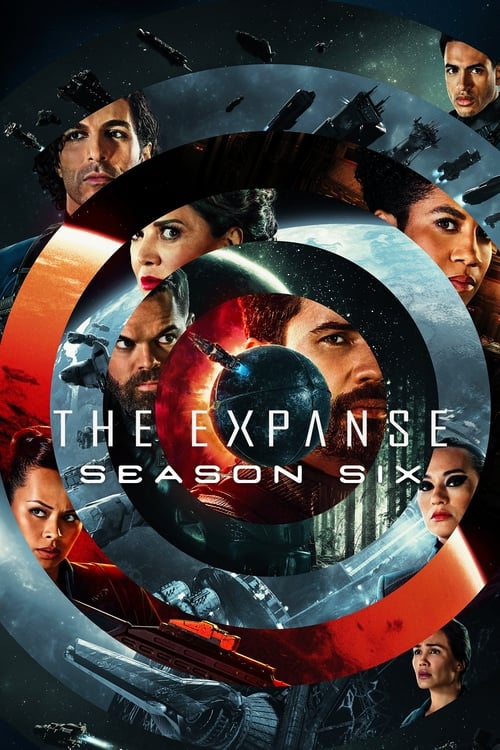
Holden and the crew of the Rocinante fight alongside the Combined Fleet of Earth and Mars to protect the Inner Planets from Marco Inaros and his Free Navy's campaign of death and destruction. Meanwhile, on a distant planet beyond the Rings, a new power rises.
Season Review
Categorical Breakdown
The plot's central conflict revolves around the historical oppression and systemic exploitation of the Belter class by the Earthers and Martians. The narrative focuses on the intersectional hierarchy of the solar system. The villain, Marco Inaros, is a radicalized member of the oppressed class, complicating a simple 'good vs. evil' dynamic, but the injustice of the 'Inners' is constantly reinforced. Diversity is a matter of course with no 'race-swapping' but character groups are defined by their immutable origins (Earther, Martian, Belter).
The governing institutions of the 'home' civilizations, Earth and Mars, are fundamentally corrupt and historically responsible for centuries of oppression against the Belters. Earth's self-hatred is implied through its guilt over the Belters' struggle. The show consistently frames Earth as an imperialist, resource-hoarding power whose downfall is viewed by the marginalized as justified vengeance. The critique of nationalism and capitalism as toxic systems is a key theme.
Female characters hold absolute command, political power, and are the most skilled military operators and engineers, often outshining their male counterparts. UN Secretary-General Avasarala and Marine Bobbie Draper are depicted as flawless operators. Naomi Nagata drives the Rocinante's moral choices. While strong male figures exist (Amos, Holden), female competence is presented as the universal standard, leaning heavily into the 'Girl Boss' trope. The plot features a complex mother/son narrative, preventing a total score for 'Anti-Natalism.'
The multi-person family of Camina Drummer, which is a key part of her history and identity, confirms the world's normalization of polyamorous, non-nuclear family structures. This non-normative structure is simply presented as common for Belters, not a point of controversy or a subject of direct lecturing. Sexuality is private but the traditional male-female pairing is not the sole 'normative structure.'
Traditional religion is not a factor in the moral universe of the future. The characters face complex moral dilemmas rooted in political and humanist philosophy. The show operates from a position of moral relativism, where 'Objective Truth' is confined to physics and alien technology, not a higher spiritual law. Faith is replaced by situational ethics and loyalty to one's chosen 'family' or faction.