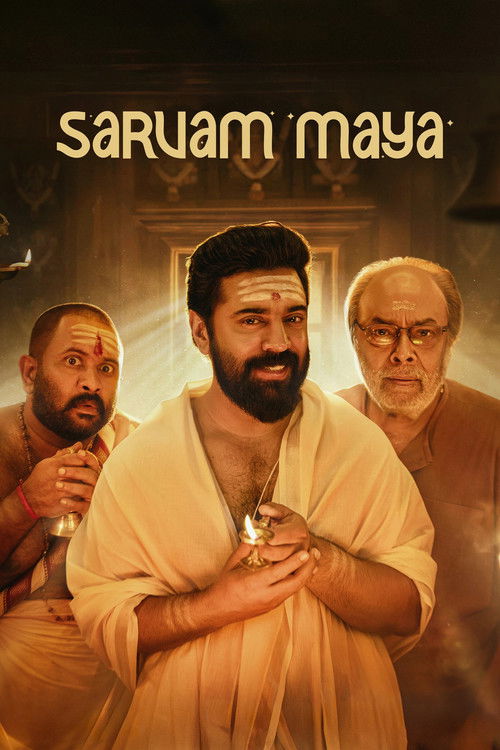
Sarvam Maya
Plot
A man who loses his belief in God meets the spirit of a young woman unable to remember what happened to her.
Get the Weekly Woke Watchlist
New and trending movies scored for woke bias, preachy messaging, and forced political themes — before you waste your evening.
No spam. One useful email per week.
Overall Series Review
Categorical Breakdown
The main characters are a Brahmin man and a Malayalee woman; casting is authentic to the regional context. The plot focuses on a man's internal struggle with career and family duty, not on an intersectional lens of privilege or oppression. The narrative does not vilify the protagonist’s traditional, privileged background but uses it as a relatable source of family tension and eventual spiritual growth.
The film does not frame the home culture or institutions as fundamentally corrupt or racist. The protagonist's initial aspiration to leave India for a European music career is countered by his eventual return to his ancestral home and temporary adoption of his hereditary priestly occupation. The story celebrates the traditional institution of family, culminating in the hero's silent devotion inspired by the lifelong integrity and loyalty of his father.
The female lead, the ghost nicknamed 'Delulu,' is a source of guidance, giving the male lead advice on his career and relationships. She is presented as a 'preachy' and helpful figure, which slightly edges toward a 'Mary Sue' or 'Girl Boss' trope where the male protagonist is initially bumbling and must be fixed or coached by the female character. However, there is no explicit anti-natalist or anti-family messaging.
The narrative centers on a normative male-female romantic relationship, albeit one where the female character is a spirit. The traditional male-female pairing is the structural standard. There is no evidence of focusing on alternative sexualities, deconstructing the nuclear family, or lecturing on gender theory.
The film’s central arc is the reversal of anti-theism. The protagonist is an explicit atheist who, through his encounter with a ghost, is gradually converted to a state of belief or acceptance of the supernatural/transcendental. The movie is described as morphing into a project to turn the atheist into a believer, which is the direct opposite of framing religion as the root of evil. The narrative uses the temple and spiritual devotion as the ultimate point of emotional and logical surrender for the hero.
Get the Weekly Woke Watchlist
New and trending movies scored for woke bias, preachy messaging, and forced political themes — before you waste your evening.
No spam. One useful email per week.