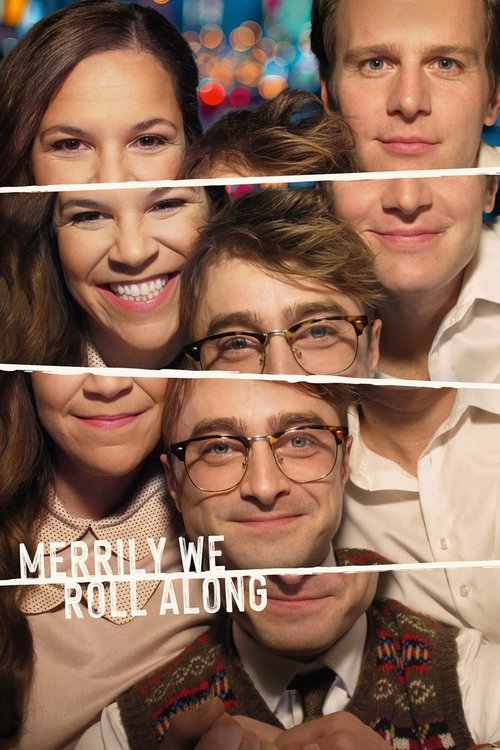
Merrily We Roll Along
Plot
Charts the turbulent relationship between composer Franklin Shepard and his two lifelong friends - writer Mary and lyricist and playwright Charley over three decades. Originally produced on Broadway in 1981.
Get the Weekly Woke Watchlist
New and trending movies scored for woke bias, preachy messaging, and forced political themes — before you waste your evening.
No spam. One useful email per week.
Overall Series Review
Categorical Breakdown
The story's core conflict focuses on the lead character's abandonment of artistic merit for commercial success. The casting features actors of varied ethnic backgrounds in supporting roles in a way one review calls 'colorblind,' though another notes this is a form of 'diversity-casting' for political correctness in the modern Broadway era. The plot itself does not lecture on privilege or systemic oppression, nor does it vilify 'whiteness' as a theme. One character's two mistresses are women of color, which one critic deemed an unfortunate cliché, but the overall theme is Frank’s moral failure, not a race-based hierarchy.
The central theme is the cynical decline of the main characters, which one review connects to the perceived moral and cultural 'self-betrayal' of America from the idealistic 1950s to the jaded 1970s. The critique is primarily aimed at the corruption within the American entertainment industry and the loss of youthful ideals. This is a moral critique of Western culture's decay, placing it above a score of 1, but it does not frame the home culture as fundamentally corrupt/racist nor demonize ancestors; it mourns the loss of their positive values.
Female characters are not depicted as 'Girl Boss' archetypes. The narrative is male-centric, and all significant female characters are defined by their relationship to the male protagonist, Frank Shepard. The character Mary is an embittered, alcoholic writer struggling with unrequited love, directly opposing the 'perfect instantly' Mary Sue trope. Frank's first wife, Beth, has a child, and the second wife, Gussie, is an ambitious stage diva and 'femme fatale.' The storyline avoids anti-natalist or 'motherhood is a prison' messaging, instead showing the failure of the nuclear family as a result of the male lead's moral weakness.
The narrative centers on traditional, heterosexual pairings, including Frank's two marriages, a divorce, and multiple affairs, all of which drive the plot. The failing nuclear family unit (Frank, Beth, and their son) is central to the conflict. Sexuality remains largely private within the drama of these failing relationships, and the show does not focus on alternative sexualities, deconstruct the nuclear family as 'oppressive,' or present gender ideology lecturing.
The conflict is fundamentally moral, dealing with a spiritual vacuum and the consequences of selling out one's soul for worldly success. This critique of a secular lifestyle suggests an inherent moral law is being violated. The film is secular in focus, but it does not actively vilify religion; a passing reference mentions 'the infrequency with which prayers are answered,' which reflects a general cynicism rather than overt anti-Christian hostility or the depiction of religious characters as bigots.
Get the Weekly Woke Watchlist
New and trending movies scored for woke bias, preachy messaging, and forced political themes — before you waste your evening.
No spam. One useful email per week.