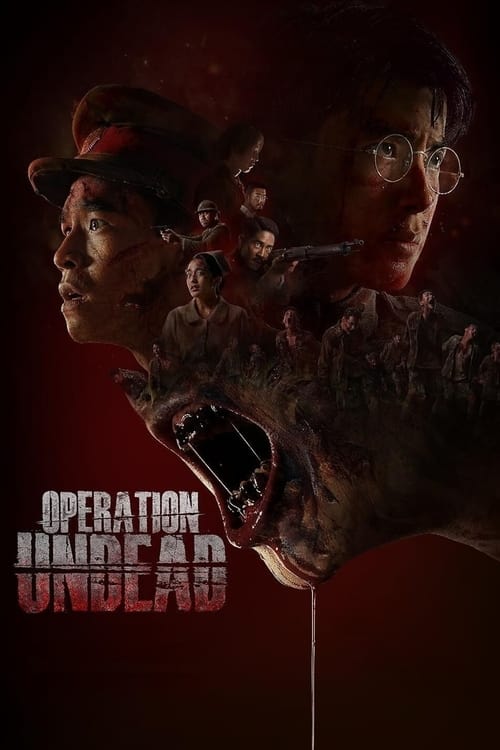
Operation Undead
Plot
Inexperienced Thai soldiers battle a growing undead menace in this gruesome survival horror. A Japanese military experiment that turns men into monsters escapes containment, it’s up to these troops to save their nation from annihilation.
Get the Weekly Woke Watchlist
New and trending movies scored for woke bias, preachy messaging, and forced political themes — before you waste your evening.
No spam. One useful email per week.
Overall Series Review
Categorical Breakdown
The movie is a historical Thai production where the conflict is between Thai forces and the Japanese invasion, a context that is historically authentic. Character worth is determined by duty, courage, and family loyalty, such as the soldier Mek, or the peace-loving Mok, not by race or an intersectional lens. There is no insertion of diversity or vilification of 'whiteness' as the focus is entirely non-Western.
The central conflict is Thai soldiers defending their nation and homeland against a foreign invader who is testing a biological weapon on the local population. The protagonist, Mek, is a loyal Thai soldier fighting for his home and pregnant partner. While the film is staunchly anti-war and critiques the horrors of conflict, it frames the family and nation as worth defending, which is the antithesis of civilizational self-hatred.
The main focus is on the male protagonists, Mek and Mok, and their male-coded struggles in the military and in combat. The male lead, Mek, is deeply committed to his pregnant girlfriend, and his excitement for his unborn child celebrates the natal and familial bond. Female characters are primarily in the traditional roles of mother and partner, and these roles are portrayed as an important, protective motivation for the men. There is no presence of the 'Girl Boss' trope or the emasculation of male characters.
The core relationships are the fraternal bond between the two male soldiers, Mek and Mok, and the heterosexual relationship of Mek and his pregnant girlfriend. The narrative focuses on normative family structures and relationships. There is no centering of alternative sexualities, deconstruction of the nuclear family, or any lecturing on sexual or gender ideology.
The core thematic message is a humanistic anti-war commentary that war makes monsters of men and costs humanity dearly. Morality is judged by the brutality of the conflict and the human connection that remains, which acknowledges a transcendent moral law against senseless violence. There is no overt hostility toward religion, specifically Christianity, or any religious theme in the narrative.
Get the Weekly Woke Watchlist
New and trending movies scored for woke bias, preachy messaging, and forced political themes — before you waste your evening.
No spam. One useful email per week.