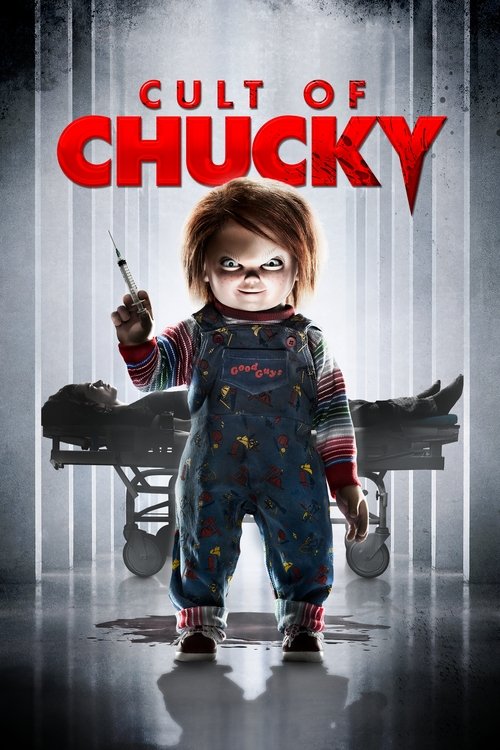
Cult of Chucky
Plot
Confined to an asylum for the criminally insane for the past four years, Nica is wrongly convinced that she, not Chucky, murdered her entire family... until a string of grisly deaths occur after her psychiatrist introduces a new group therapy tool -- a "Good Guy" doll.
Get the Weekly Woke Watchlist
New and trending movies scored for woke bias, preachy messaging, and forced political themes — before you waste your evening.
No spam. One useful email per week.
Overall Series Review
Categorical Breakdown
The movie centers Nica, a disabled heroine who is initially a victim of a corrupt Western institution. She becomes a 'badass' only by being possessed by the soul of a male serial killer, Chucky. Her disability is 'cured' by this evil possession. The primary authority figure, a white male psychiatrist, is portrayed as a vile sexual predator, fitting the trope of the evil/incompetent white male authority.
The central institutional setting, a mental asylum representing Western medical and psychiatric establishments, is framed as corrupt and abusive, actively gaslighting and harming the protagonist. The narrative critiques authority figures and the system that confined the innocent protagonist. It is a genre critique of institutions rather than a broad indictment of Western civilization or ancestry.
The main hero, Nica, and the recurring villain, Tiffany, are powerful, active female characters. The primary antagonist, Dr. Foley, is a male authority figure who is exposed as a sexual abuser and brutally killed. The final shot is of the two women, one possessed by a male soul, escaping together as a female-led evil duo, firmly cementing the emasculation of the male authority figure and celebrating female-presenting power.
The score is high due to overt centering of non-normative sexuality. Nurse Carlos is an openly gay character whose family structure (husband with a disability) is highlighted as positive representation. Tiffany is explicitly shown to be bisexual. The final climactic kiss between Tiffany and the possessed Nica (a male soul in a female body) is a celebration of 'queerness' and non-traditional sexual identity, which is a core theme advanced by the franchise's creator.
The film operates in a moral vacuum where the only 'spiritual' force is the occult evil of Charles Lee Ray's voodoo magic. The protagonist ultimately embraces this demonic evil, which allows her to escape and exact vengeance. This embrace of pure, nihilistic occult evil and the rejection of a higher moral law in favor of subjective power dynamics points to a high level of moral relativism.
Get the Weekly Woke Watchlist
New and trending movies scored for woke bias, preachy messaging, and forced political themes — before you waste your evening.
No spam. One useful email per week.