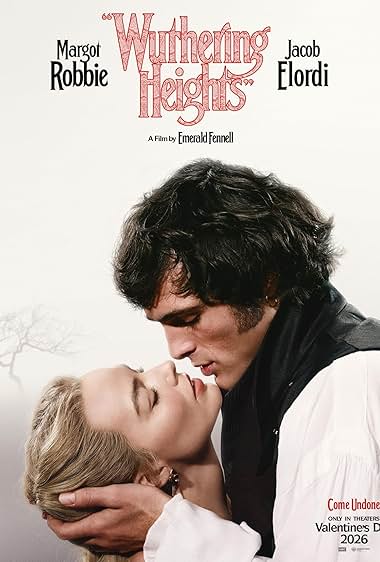
"Wuthering Heights"
Plot
A passionate and tumultuous love story set against the backdrop of the Yorkshire moors, exploring the intense and destructive relationship between Heathcliff and Catherine Earnshaw.
Get the Weekly Woke Watchlist
New and trending movies scored for woke bias, preachy messaging, and forced political themes — before you waste your evening.
No spam. One useful email per week.
Overall Series Review
Categorical Breakdown
The film employs colorblind casting for key supporting roles like Nelly and Edgar, ignoring the historical social structures of 18th-century Yorkshire. Narrative focus shifts from the novel's class nuances to modern lectures on systemic patriarchal oppression.
Historical British culture is portrayed as a grotesque collection of boozing, gambling, and cruelty. The film strips the English countryside of its romantic beauty, treating the ancestral home as a symbol of decaying and corrupt Western tradition.
Catherine is reimagined as a 'girlboss' figure seeking agency through sexual transgression. The script reframes the 18th-century domestic sphere as a prison and portrays traditional marriage solely as a tool for male subjugation.
The story focuses on deconstructing the traditional family unit and the romantic triangle. Characters are styled with gender-fluid aesthetics, and the narrative frequently questions established masculine and feminine norms through anachronistic dialogue.
Traditional religious devotion is personified by characters who are depicted as demented fanatics or hypocrites. The film frames faith as a psychological weapon used to control and suppress the natural desires of the protagonists.
Get the Weekly Woke Watchlist
New and trending movies scored for woke bias, preachy messaging, and forced political themes — before you waste your evening.
No spam. One useful email per week.