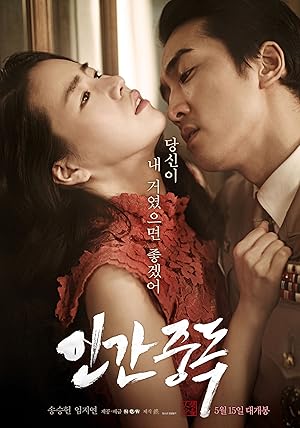
Obsessed
Plot
In the summer of 1969, Colonel Kim Jin Pyeong returns to South Korea after serving in Vietnam. He is suffering from post-traumatic disorder and trapped in a loveless marriage with Soo Jin, who is desperate for a child. One night, he meets new neighbor Jong Ga Heun, the Chinese-Korean wife of Captain Kyung Woo Jin who recently transfered to the army camp. In the stifling atmosphere of the army camp, the two fall into a secret and passionate affair.
Get the Weekly Woke Watchlist
New and trending movies scored for woke bias, preachy messaging, and forced political themes — before you waste your evening.
No spam. One useful email per week.
Overall Series Review
Categorical Breakdown
The narrative features a Chinese-Korean female lead, Jong Ga Heun, introducing an element of non-standard identity within the homogenous military setting. However, the core drama focuses on universal themes of love, obsession, and emotional trauma, not on intersectional hierarchy or systemic oppression based on her ethnicity. Characters are primarily driven by their personal desire and trauma rather than immutable characteristics.
The central conflict arises from the main characters' need to escape their current lives, which are trapped by the 'stifling atmosphere' and 'rigid hierarchy' of the South Korean military base and its high-society wives. The traditional institutions of the military and arranged marriage are portrayed as corrupting forces that manufacture misery and compel characters to live inauthentic lives, suggesting a critique of the home culture's stifling nature.
The movie centers on an affair that utterly deconstructs the marriages and nuclear family units of both couples. The colonel's wife, Soo Jin, is highly ambitious and desperate to elevate her husband's career, implicitly casting the traditional 'wife' role as an extension of careerism. The female lead, Jong Ga Heun, is emotionally deep but ultimately pragmatic in her choice, contrasting with the male lead who becomes completely obsessed and self-destructive, a form of emasculation for the decorated war hero.
The entire story is a heterosexual erotic melodrama focused entirely on the illicit passion between a man and a woman within their respective marriages. There are no elements of centering alternative sexualities, deconstructing the nuclear family outside of the infidelity, or promoting gender ideology in the plot summary or commentary.
The moral and emotional conflicts in the film, such as trauma, obsession, and infidelity, are presented through a psychological and social lens, focusing on desperation and the consequences of breaking a social code. No characters or institutions are shown vilifying religion, and the narrative does not frame traditional religion, such as Christianity, as the root of societal evil.
Get the Weekly Woke Watchlist
New and trending movies scored for woke bias, preachy messaging, and forced political themes — before you waste your evening.
No spam. One useful email per week.