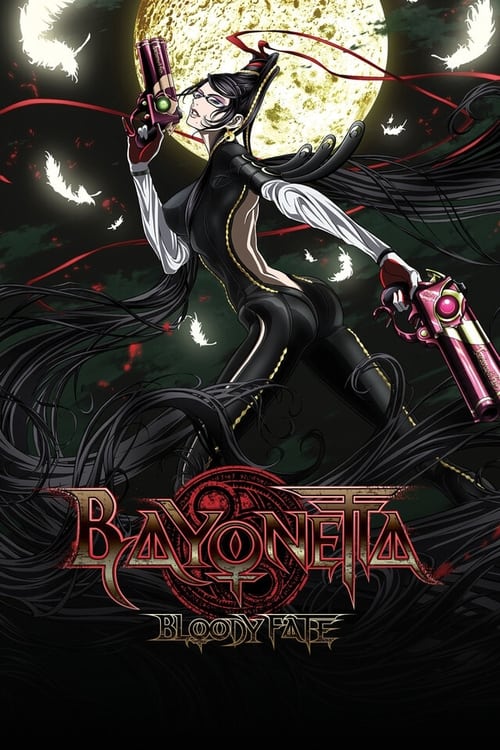
Bayonetta: Bloody Fate
Plot
Bayonetta is an ancient witch who awakens from a five hundred-year slumber with no memory of her life. Armed with a gun in each limb, she embarks on a journey to rediscover her past, defeating all bloodthirsty angels that stand in her way.
Get the Weekly Woke Watchlist
New and trending movies scored for woke bias, preachy messaging, and forced political themes — before you waste your evening.
No spam. One useful email per week.
Overall Series Review
Categorical Breakdown
The plot's central conflict is based on a rigid fantasy clan hierarchy of Umbra Witches and Lumen Sages, making a character's 'immutable characteristic' (their forbidden mixed bloodline) the core of their persecution. The film does not, however, engage in real-world racial politics, race-swapping, or the vilification of whiteness as a societal concept. All characters are defined by their faction's magic and power, not by modern identity groupings.
The central villain is the last Lumen Sage, Balder, a religious leader who runs the Ragna Church in the European town of Vigrid and seeks to destroy the current world to remake it. The established, pseudo-Western civilization and its religious institutions are explicitly framed as irredeemably corrupt and the source of the apocalyptic threat. The city's gothic aesthetic is tied directly to the forces trying to end all life.
Bayonetta is an extremely powerful, dominant, and hyper-sexualized female protagonist who effortlessly defeats nearly all opponents. The main male supporting character, Luka, is consistently depicted as a bumbling, easily confused reporter who is physically weak, often needing rescue, and serves as a comedic foil to Bayonetta's competence. The female lead is the only character with the power and self-possession required to save the world, which she achieves by defeating the powerful male villain. While there is a strong maternal theme (she protects Cereza), her overall persona embodies the 'Girl Boss' trope in an extreme form.
The story adheres to a normative structure, revolving around the forbidden relationship between a male Lumen Sage and a female Umbra Witch (Bayonetta's parents) as the catalyst for the conflict. The hero forms a pseudo-family bond with a child, Cereza, who is revealed to be her younger self. The narrative's focus on sexuality is for fanservice and Bayonetta's personal dominance, not for promoting alternative sexual identities or deconstructing the nuclear family as a political concept.
The main enemies the hero constantly battles and brutally destroys are the 'Angels' of Paradiso. The primary villain, Balder, is the leader of the Lumen Sages, a quasi-religious order controlling a Church and manipulating the world for the resurrection of a deity, Jubileus. Traditional religious imagery is co-opted and directly inverted, portraying the forces of 'Heaven' and its organized religion as monstrous, bloodthirsty, and the root of all evil, while the hero is an Umbra Witch aligned with the demon realm of Inferno.
Get the Weekly Woke Watchlist
New and trending movies scored for woke bias, preachy messaging, and forced political themes — before you waste your evening.
No spam. One useful email per week.