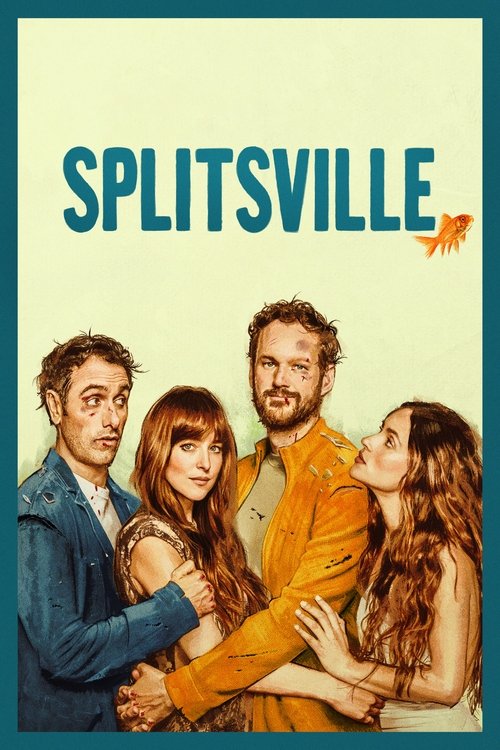
Splitsville
Plot
After Ashley asks for a divorce, good-natured Carey runs to his friends, Julie and Paul, for support. He’s shocked to discover that the secret to their happiness is an open marriage, that is until Carey crosses the line and throws all of their relationships into chaos.
Get the Weekly Woke Watchlist
New and trending movies scored for woke bias, preachy messaging, and forced political themes — before you waste your evening.
No spam. One useful email per week.
Overall Series Review
Categorical Breakdown
The narrative does not primarily rely on race, class, or intersectional hierarchy to drive the plot. The main conflict is rooted in infidelity, jealousy, and relationship structures among a predominantly wealthy, secular group. Casting includes diversity, but the main male lead is portrayed as 'good-natured,' while one of the white male characters is depicted as a 'jerk' and 'financially crooked,' balancing the portrayal of men by merit and flaws rather than group identity.
The central conflict satirizes the 'luxury beliefs' of modern elites who attempt to deconstruct traditional marriage. The film positions the resulting chaos as a consequence of rejecting normative institutions, implying a failure of the 'new' rather than framing the Western home and heritage as fundamentally corrupt. There is a critique of the characters' self-involved materialism and attempt to escape commitment, but not a hostility toward broader Western civilization itself.
Ashley, one of the female leads, initiates the divorce to ‘find herself’ and enthusiastically pursues a polyamorous lifestyle, presenting the career-over-motherhood or personal-fulfillment-over-commitment message. Julie, the other main female character, is portrayed as the most reasonable person in the love quadrangle, but her commitment to motherhood is complicated by her own loneliness and her husband’s neglect. While the men are often bumbling or toxic, the women are also shown as flawed and agents of chaos, preventing a full 'Girl Boss' score, but the anti-natalist element of seeking personal freedom over commitment is strongly present.
The core plot is entirely built upon the exploration and deconstruction of the nuclear family and traditional male-female pairing. The secret to a main couple’s happiness is an open marriage, which ultimately fails to contain traditional jealousy and commitment issues. The plot features characters becoming polyamorous and bringing both men and women home. The film’s focus is on normalizing and centering these alternative sexual and relationship structures as the foundation of the modern story, regardless of the chaotic outcome.
There is no direct hostility toward traditional religion, specifically Christianity. The film lightly satirizes the 'woo-woo talk' of secular, spiritually vacant characters who believe in subjective 'emotional freedom' and a 'universe that is out of alignment.' The conflict is rooted in human moral failure in a secular context, which suggests a critique of moral relativism through the ensuing chaos rather than an endorsement of it.
Get the Weekly Woke Watchlist
New and trending movies scored for woke bias, preachy messaging, and forced political themes — before you waste your evening.
No spam. One useful email per week.