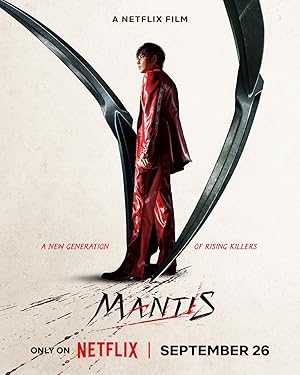
Mantis
Plot
Mantis, an ace assassin, returns to the contract killer industry after a hiatus, encountering his trainee friend Jae-yi and a retired legendary killer Dok-go, who now runs the organization.
Get the Weekly Woke Watchlist
New and trending movies scored for woke bias, preachy messaging, and forced political themes — before you waste your evening.
No spam. One useful email per week.
Overall Series Review
Categorical Breakdown
The narrative's core conflict centers on assassins fighting for professional contracts, reputation, and control of a criminal organization. Character advancement and success are based on skill and ruthlessness as a killer, which is a form of meritocracy. The film’s South Korean context and plot do not engage with Western themes of 'whiteness,' 'race-swapping,' or intersectional hierarchy.
The story focuses entirely on the internal politics of an assassin underworld. It does not contain any commentary or hostility toward South Korean culture, traditional social institutions, or the nation's heritage. The world is a criminal one, so the deconstruction is limited to a system of assassins, not a civilization.
The female lead, Jae-yi, is a highly competent assassin who fights for her place in the industry, eventually taking over a major organization by the end. Her character arc is driven by an inferiority complex and ambition, demonstrating she earns her position and is not instantly perfect. Male characters, Mantis and Dok-go, are also highly skilled and dangerous rivals, not uniformly incompetent.
The plot is focused on power struggles, action, and professional rivalry within the contract killing business. There is no presence of gender ideology, alternative sexualities are not centered, and the nuclear family is not a subject of deconstruction or commentary.
The world of contract killers operates with an amoral, power-driven code. The film does not include religious elements, Christian characters, or an explicit hostile critique of faith. The morality is subjective to the assassin industry, but this is a secular setting, not an anti-theist lecture.
Get the Weekly Woke Watchlist
New and trending movies scored for woke bias, preachy messaging, and forced political themes — before you waste your evening.
No spam. One useful email per week.