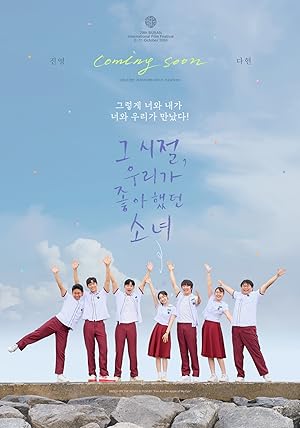
You Are the Apple of My Eye
Plot
A group of close friends who attend a private school all have a debilitating crush on the sunny star pupil, Sun-ah. The only member of the group who claims not to is Jin-woo, but he ends up loving her as well.
Get the Weekly Woke Watchlist
New and trending movies scored for woke bias, preachy messaging, and forced political themes — before you waste your evening.
No spam. One useful email per week.
Overall Series Review
Categorical Breakdown
The film is set in South Korea, featuring an entirely Korean cast, and focuses on merit (grades/character) and personal struggles. There is no discussion of race, privilege, systemic oppression, or forced diversity. Characters are judged solely by their personalities, actions, and academic standing, aligning perfectly with the Universal Meritocracy standard.
The film is a nostalgic tribute to the specific time and place of Korean youth in the early 2000s, utilizing period-specific culture, music, and the setting of a traditional high school. The tone is fond and sentimental, not hostile toward the home culture or institutions. The setting frames the environment as a cherished backdrop to the characters' growth, not as fundamentally corrupt.
The core dynamic is a traditional complementary one where the female lead, Seon-ah, is the intelligent, moral compass who encourages the male lead, Jin-woo, to improve. Her perfection is limited to being the 'model student'—a standard trope in this genre—and she is defined by her intellect and grace, not as a 'Girl Boss.' She is a love interest and a catalyst for the male lead's growth, which slightly reduces her autonomy in some critics' views compared to the original, but the focus remains on a heterosexual pairing and the drama of unrequited or first love, not anti-natalism or radical feminist messaging. The ending involves a wedding, affirming the traditional family structure.
The narrative is a pure, heterosexual high school romance focused entirely on the male protagonist's crush on the female protagonist and their eventual pairing/parting. There is no presence of alternative sexual ideologies, deconstruction of the nuclear family (which is affirmed by the end), or lecturing on gender theory. The structure is strictly normative.
The plot is a simple youth romance that does not engage with religion or explicit moral philosophy. Morality is expressed through the characters' personal sincerity, kindness, and commitment to their relationships and studies, reflecting an objective, traditional understanding of virtue. There is no hostility toward faith or any presentation of Christian characters as villains or bigots.
Get the Weekly Woke Watchlist
New and trending movies scored for woke bias, preachy messaging, and forced political themes — before you waste your evening.
No spam. One useful email per week.