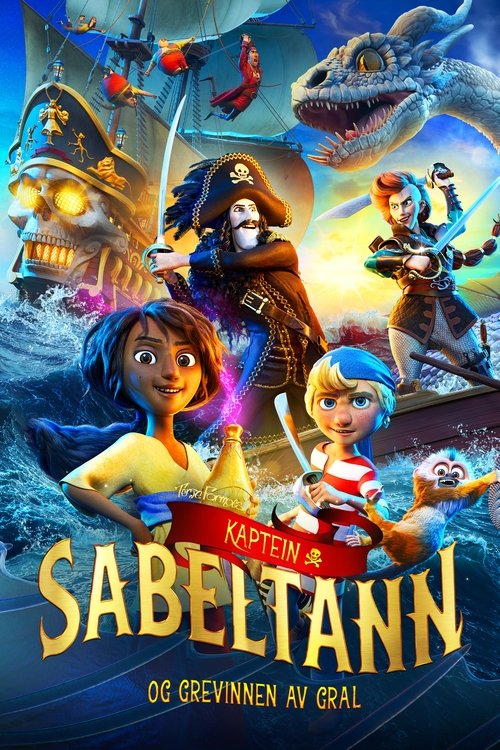
Captain Sabertooth and the Countess of Grel
Plot
Set sail for an exciting pirate adventure when Captain Sabertooth and Raven fight against Sibylla and her terrifying dragon in a battle that can only be won by courage, friendship and rat soup!
Get the Weekly Woke Watchlist
New and trending movies scored for woke bias, preachy messaging, and forced political themes — before you waste your evening.
No spam. One useful email per week.
Overall Series Review
Categorical Breakdown
Characters are judged by their actions and their roles in the pirate world. The main conflict is a classic good-versus-evil fantasy adventure between pirates and a countess/sorceress. The narrative shows no indication of relying on intersectional hierarchy, lecturing on privilege, or forcing race-swapping. The characters are consistent with the established, historically-based fantasy franchise.
The central conflict involves the heroes defending their 'pirate homeland' from the Countess’s plot, showing a clear appreciation and defense of their home and culture. The film is part of a franchise considered a cherished part of Norwegian cultural heritage, demonstrating an underlying gratitude for its own source material. There is no evidence of civilizational self-hatred or demonization of heritage.
The primary antagonist, Countess Sibylla, is a powerful female figure who successfully challenges the established male-led pirate crew. She is a strong, non-incompetent villain who uses magic and a dragon, which elevates her above the typical villain and mildly leans into the 'Girl Boss' trope, though she is not a perfect, un-flawed hero. Male characters, including the Captain, are flawed (materialistic), but not universally depicted as bumbling or toxic.
The core themes focus on traditional, normative structures of friendship and family ties. The movie is a simple children's adventure with an age 6 rating. No plot points, character arcs, or dialogue center on alternative sexualities, gender identity, or the deconstruction of the nuclear family structure.
The movie is a fantasy adventure that features magic and a dragon, placing the action in a secular, mythical world with its own moral code (pirate honor, loyalty). The narrative does not contain any hostility toward religion, nor does it explicitly frame any traditional faith as the root of evil. The simple good-vs-evil conflict acknowledges an objective moral truth (kidnapping and theft are bad).
Get the Weekly Woke Watchlist
New and trending movies scored for woke bias, preachy messaging, and forced political themes — before you waste your evening.
No spam. One useful email per week.