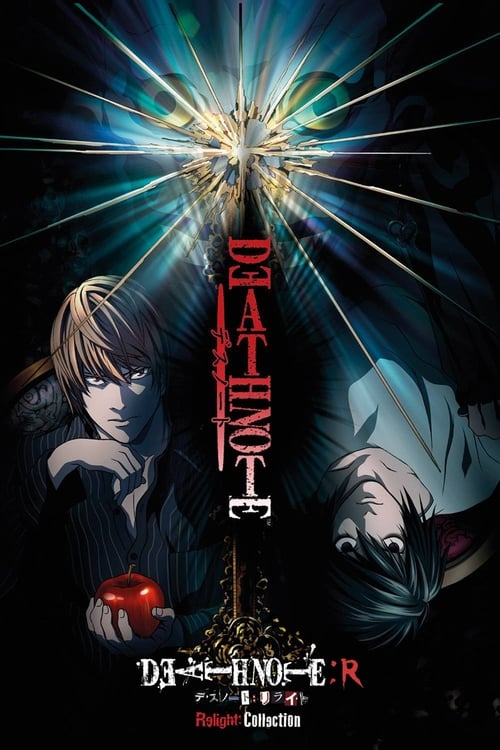
Death Note Relight 1: Visions of a God
Plot
When rogue shinigami Ryuk leaves his Death Note in the human world, he has no idea how far the one who finds it will take his new-found power. With the Death Note in hand, brilliant high school student Light Yagami vows to rid the world of evil. A recap of Death Note episodes 1–26, with alternate footage.
Get the Weekly Woke Watchlist
New and trending movies scored for woke bias, preachy messaging, and forced political themes — before you waste your evening.
No spam. One useful email per week.
Overall Series Review
Categorical Breakdown
The main conflict is an intellectual battle between the genius Light Yagami and the equally brilliant L. Character worth is determined entirely by strategic and deductive merit, not by race or immutable characteristics. All major characters, except L, are Japanese, reflecting the authentic setting without forced diversity or vilification of 'whiteness.'
The narrative's critique is aimed at the universal problem of 'rotten' crime and corruption in the world's legal systems, not specifically Japanese or Western civilization. The protagonist’s father, a police chief, is portrayed as an honorable and moral figure who defends the institutions of law and family against his own son's chaos, representing an affirmation of traditional civilizational structure.
Female characters like Misa Amane are given vast power through the Death Note and Shinigami Eyes but are written as obsessively devoted to and manipulated by the male lead, Light Yagami. Misa's entire character arc is centered on being a willing, subservient tool for Light’s ambition, embodying the 'lovesick tool' trope. Other highly capable female characters are quickly outmaneuvered or removed from the plot by the male protagonist.
The narrative focuses on a hyper-intense rivalry between Light and L and the romantic-obsessive dynamic between Light and Misa. There is no representation, exploration, or political commentary related to alternative sexualities, gender ideology, or the deconstruction of the nuclear family structure. Sexuality remains a private, peripheral matter to the core plot of life and death.
Light Yagami’s entire motivation is to become the 'God' of the new world (Kira) by enforcing his own subjective, human-created moral code, which is a direct rejection and usurpation of objective, transcendent morality and traditional law. The story’s conflict is literally a philosophical debate on whether a human can determine absolute good and evil, placing moral relativism at the heart of the main villain’s ideology.
Get the Weekly Woke Watchlist
New and trending movies scored for woke bias, preachy messaging, and forced political themes — before you waste your evening.
No spam. One useful email per week.