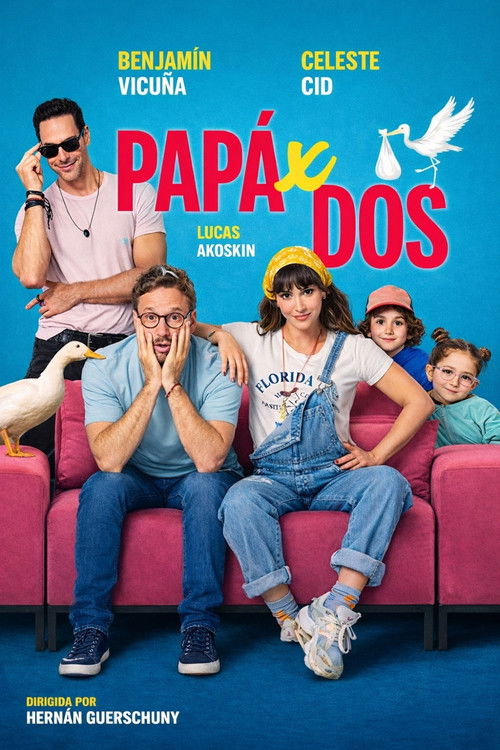
Papá por dos
Plot
N/A
Get the Weekly Woke Watchlist
New and trending movies scored for woke bias, preachy messaging, and forced political themes — before you waste your evening.
No spam. One useful email per week.
Overall Series Review
Categorical Breakdown
The casting and central conflict are not rooted in race, immutable characteristics, or intersectional hierarchy. The differences between the characters are based on personality traits (structured vs. free-spirited) and relational history, not a lecture on privilege or systemic oppression.
The narrative's central goal is to challenge and 'break with' what is expected of the traditional family unit, a core social institution. This represents an internal critique of a foundational societal structure, but does not extend to demonizing the nation's entire culture, history, or ancestors.
The female protagonist (Ana) is the ultimate decision-maker, defining the unconventional family structure to which the two male leads must submit, which shifts the protective male role. The central male conflict involves a traditional male (Santiago) struggling against a more 'deconstructed macho' archetype (Pancho), framing traditional masculinity as the source of the main character’s personal chaos and insecurity.
The movie actively promotes the deconstruction and redefinition of the nuclear family unit and normative structure by centering a non-conjugal, co-parenting triad (two fathers, one mother, one child). This directly challenges the 'Normative Structure' category, but it does so via a heterosexual arrangement rather than centering alternative sexualities or gender ideology.
The plot summary and available commentary indicate the conflict is entirely secular, dealing with romantic and family-planning complications. There is no evidence of hostility toward religion, specific religious figures, or a critique of objective moral law.
Get the Weekly Woke Watchlist
New and trending movies scored for woke bias, preachy messaging, and forced political themes — before you waste your evening.
No spam. One useful email per week.